
Speyeria zerene
(Boisduval, 1852)
Zerene fritillary, silverspot
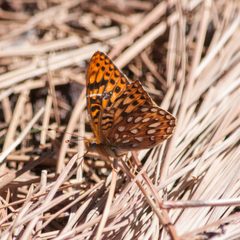
Speyeria zerene is a medium-sized fritillary native to western North America, characterized by orange-brown upperside wings with black markings and distinctive silver metallic spots on the undersides. The comprises approximately 15 recognized , several of which are of conservation concern, including the federally threatened Oregon (S. z. hippolyta) and Behren's silverspot (S. z. behrensii). Larvae are obligate on Viola species, particularly Viola adunca, while feed on nectar from diverse flowering plants. Multiple subspecies have experienced significant range reductions due to loss and degradation.
Pronunciation
How to pronounce Speyeria zerene: /ˈspaɪəriə ˈzɛriːniː/
These audio files are automatically generated. While they are not always 100% accurate, they are a good starting point.
Identification
Distinguished from other Speyeria by the combination of orange-brown upperside with black markings and prominent silver metallic spots on wing undersides. identification requires examination of precise spot patterns, size, and geographic origin. S. z. hippolyta (Oregon ) occurs in coastal salt-spray meadows and is federally threatened. S. z. behrensii (Behren's silverspot) and S. z. myrtleae (Myrtle's silverspot) are also of conservation concern with restricted ranges.
Images
Appearance
Medium-sized with body length 25–28 mm and wingspan approximately 55 mm. Upperside of wings orange-brown with black and black spots. Underside of wings displays distinctive silver metallic spots against darker background. Body black with fine hairs covering both wings and body. Wing shape typical of fritillary butterflies with rounded margins.
Habitat
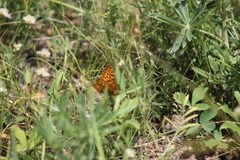
Coastal salt spray meadows, montane meadows, and stabilized dunes. Grassland with larval plants are essential components. occupy distinct habitats: S. z. hippolyta in coastal meadows, S. z. behrensii in coastal prairies, S. z. myrtleae in coastal terraces. Elevation ranges from sea level to at least 2,700 m in the Sierra Nevada.
Distribution
Western North America from Washington state through Oregon to California. Historical range extended from Washington to California; current distribution fragmented with -specific ranges. Alpine County, California, in the Sierra Nevada at 2,700 m elevation. Subspecies S. z. hippolyta restricted to few coastal sites in Oregon and California.
Seasonality
active in summer; specific periods vary by and elevation. At lower elevations, adults may be observed from late spring through summer. occurs as larvae; laid in late summer on dried stems and debris near plants.
Diet
Larvae feed exclusively on Viola adunca (blue violet) leaves; must consume multiple individual plants to successfully pupate. feed solely on nectar from flowers, primarily Asteraceae including thistles, asters, and pearly everlasting, plus yarrow and other flowering plants.
Host Associations
- Viola adunca - larval plantEssential for larval development; used for food and shelter during early instars
Life Cycle
Females lay pink-tan on dried stems and debris near Viola adunca. Eggs hatch and larvae emerge in spring. Larvae progress through six instars, feeding on violet leaves and pupating on the plant. lasts approximately two weeks. lifespan approximately three weeks. Larvae overwinter; broken by spring warming. Critical survival threshold: 4th instar larvae require host plant of at least 4 V. adunca plants/m² for 10% survival probability to pupation.
Behavior
fly rapidly, typically 15–20 feet above ground, dipping to visit flowers briefly. Larvae forage randomly through meadow vegetation to locate plants. Younger larvae tend to remain in one place; older, larger larvae move more rapidly with less acute turning angles, ranging more widely to locate new host plants. Males patrol for females in breeding areas.
Ecological Role
nectar feeding contributes to pollination of flowering plants. Larval herbivory on Viola adunca represents specialized trophic interaction. Serves as for meadow health and conservation status.
Human Relevance
Subject of intensive conservation efforts including captive rearing programs at zoos and colleges. U.S. Fish & Wildlife Service recovery plan initiated in 1999 for threatened . restoration programs implemented on public and private lands. False indigo and violet nurseries established to support rearing programs and habitat restoration. Symbolic value for regional biodiversity conservation in Pacific Northwest and California.
Similar Taxa
- Speyeria callippeOverlapping range in California; distinguished by underside spot patterns and lack of prominent silver metallic spots
- Speyeria cybeleSimilar size and coloration; distinguished by wing pattern details and geographic distribution
- Speyeria atlantisMountain-dwelling fritillary with overlapping elevation range; silver spot patterns differ
More Details
Subspecies diversity
Approximately 15 recognized, reflecting significant geographic variation across the range. Several subspecies have been described from isolated and are of conservation concern due to restricted distributions and specificity.
Conservation status variation
Conservation status varies dramatically among : S. z. hippolyta is federally threatened, S. z. behrensii and S. z. myrtleae are also imperiled, while other subspecies remain more widespread and secure.
Captive rearing methodology
Conservation programs capture mated females in late summer, induce -laying in facilities, refrigerate larvae over winter to simulate natural conditions, then rear until or release size.
Sources and further reading
- BugGuide
- Wikipedia
- GBIF taxonomy match
- Catalogue of Life
- UC Davis Seminar: 'Insect Conservation in an Uncertain Future' | Bug Squad
- The Land of Z (Zerene) and The Land of B (Bohart) | Bug Squad
- Bohart Open House: Celebrating the California Dogface Butterfly | Bug Squad
- Take a Virtual Tour of the California Dogface Butterfly Habitat | Bug Squad
- Can You Name California's State Insect? | Bug Squad
- In Pursuit of the California Dogface Butterfly | Bug Squad
- Modeling caterpillar movement to guide habitat enhancement for Speyeria zerene hippolyta, the Oregon silverspot butterfly