
Boloria freija
Thunberg, 1791
Freija fritillary
Species Guides
2- Boloria freija browni
- Boloria freija freija(Freija Fritillary)
Boloria freija is a circumboreal fritillary found in Arctic and subarctic across the Northern Hemisphere. The exhibits a two-year , with larvae feeding on specific bog and tundra plants including cloudberry and various Ericaceae. are active during brief summer periods in northern latitudes.
Pronunciation
How to pronounce Boloria freija: /bəˈloʊriə ˈfreɪjə/
These audio files are automatically generated. While they are not always 100% accurate, they are a good starting point.
Identification
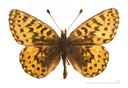
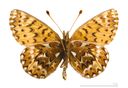
Hindwing underside features a distinct silvery white band between central and marginal areas, with a large rhomboidal silver spot at the center and elongated silver marginal spots. Upperside resembles Boloria dia in size and pattern. More variegated hindwing underside distinguishes it from Boloria chariclea.
Images
Habitat
Restricted to bogs and tundra . Occupies open, wet moorland and Arctic-alpine environments with low vegetation cover.
Distribution
Circumboreal distribution spanning Northern Europe north of 60°N (with occasional southern records), the Urals, Siberia, Russian Far East, mountains of northern Mongolia, Hokkaido, and North America extending south to 35°N in the Rocky Mountains.
Seasonality
period occurs during summer months; exact timing varies by latitude with shorter seasons at northern extremes.
Diet
Larvae feed on Rubus chamaemorus (cloudberry), Dryas , Vaccinium uliginosum, Arctostaphylos alpina, A. uva-ursi (kinnikinnick), Empetrum nigrum (crowberry), Rhododendron aureum, and Rhododendron lapponicum. nectar sources not documented in available sources.
Host Associations
- Rubus chamaemorus - larval food plant
- Dryas - larval food plant
- Vaccinium uliginosum - larval food plant
- Arctostaphylos alpina - larval food plant
- Arctostaphylos uva-ursi - larval food plant
- Empetrum nigrum - larval food plant
- Rhododendron aureum - larval food plant
- Rhododendron lapponicum - larval food plant
Life Cycle
Produces one every two years. Complete with , larval, pupal, and stages; specific developmental timing undocumented.
Similar Taxa
- Boloria diaSimilar upperside size and pattern; distinguished by hindwing underside markings
- Boloria charicleaHindwing underside resembles freija but lacks the distinct silvery white band and more variegated pattern
More Details
Etymology
Named after Freya, the goddess of love and war in Norse mythology.
Sources and further reading
- BugGuide
- Wikipedia
- GBIF taxonomy match
- iNaturalist taxon
- NCBI Taxonomy
- Funding from ScottishPower Foundation helps to restore vital habitat to encourage thriving natural ecosystem - Buglife Blog - Buglife
- Do Managed Burns in Grasslands Benefit Butterflies?
- An Evening at Silent Valley - Buglife Blog - Buglife