
Dryas
Julia heliconians
Species Guides
1- Dryas iulia(Julia butterfly)
Dryas is a of brush-footed butterflies (Nymphalidae) containing the single Dryas iulia, commonly known as the Julia butterfly or Julia heliconian. Native from Brazil through Central America to the southern United States, this species has been observed as far north as eastern Nebraska during summer months. The genus is notable for its specialized feeding , with known to drink tears from reptiles and secretions from sleeping birds to obtain salts and . Over 15 have been described across its broad Neotropical and Nearctic range.
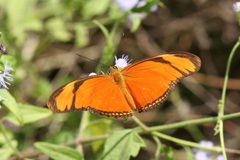
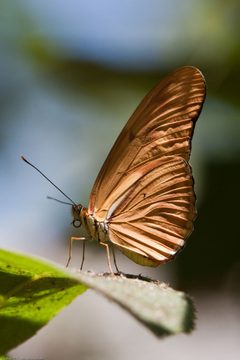
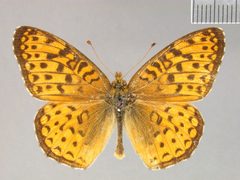
Pronunciation
How to pronounce Dryas: /ˈdraɪəs/
These audio files are automatically generated. While they are not always 100% accurate, they are a good starting point.
Images
Distribution
Native range extends from Brazil through Central America to southern Texas and Florida; summer vagrants have been recorded as far north as eastern Nebraska. The occurs across Neotropical and southern Nearctic regions.
Diet
have been observed drinking the salty tears of caiman and other reptiles, and sipping secretions from sleeping birds to obtain salts and .
Behavior
engage in specialized nutrient acquisition including 'tear-feeding' (lachryphagy) on reptiles and secretion feeding on sleeping birds to obtain limiting salts and .
Sources and further reading
- BugGuide
- Wikipedia
- iNaturalist taxon
- NCBI Taxonomy
- Catalogue of Life
- Bohart Bugs Beckon at Vacaville Museum's Exhibit | Bug Squad
- Rosemary Mosco: Butterflies Are Pretty, But They Can Be 'Pretty Gross' | Bug Squad
- Canvey Wick - February Projects with the South East England Youth Nature Network - Buglife Blog - Buglife
- Europe in the Younger Dryas: Animal Resources, Settlement, and Funerary Behavior
- Kelp Forests, Coastal Migrations, and the Younger Dryas: Late Pleistocene and Earliest Holocene Human Settlement, Subsistence, and Ecology on California’s Channel Islands
- Catastrophic ice sheet break-up surrounding Baffin Bay coincident with the Younger Dryas and the Oldest Dryas/ Bølling-Allerød interstadial