
Cyrestinae
Daggerwing and Map Butterflies
Genus Guides
1- Marpesia(Daggerwings)
Cyrestinae is a small of brush-footed butterflies (Nymphalidae) comprising three : Cyrestis, Chersonesia, and Marpesia. The subfamily was established after taxonomic revision split the former Cyrestini and Pseudergolini tribes, which were briefly combined before being recognized as separate subfamilies. Cyrestinae is now considered the sister group to the larger Nymphalinae subfamily. The group exhibits a disjunct tropical distribution, with Marpesia restricted to the Neotropics and Cyrestis and Chersonesia occurring primarily in the Oriental region with some Afrotropical representation.
Pronunciation
How to pronounce Cyrestinae: //saɪˈrɛstɪˌniː//
These audio files are automatically generated. While they are not always 100% accurate, they are a good starting point.
Identification
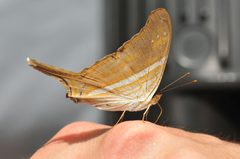
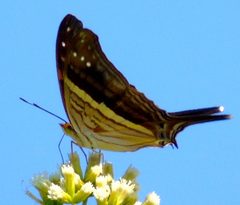
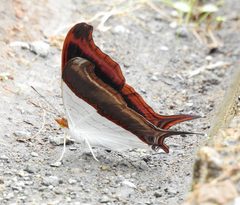
Members of Cyrestinae can be distinguished from other Nymphalidae by their characteristic wing patterns: Cyrestis display intricate, map-like wing patterns with fine lines and patches; Marpesia (daggerwings) have elongated, triangular forewings with bold, often orange or brown coloration; Chersonesia species show banded or spotted patterns on more rounded wings. All three share the reduced, brush-like forelegs typical of Nymphalidae. The combination of these wing pattern types with tropical distribution helps separate this subfamily from similar Nymphalinae and Pseudergolinae.
Images
Habitat
Tropical forest , including primary and secondary rainforests, forest edges, and riparian corridors. occur from lowland to mid-elevation zones. Marpesia species frequent forest clearings and riverine areas in the Neotropics. Cyrestis and Chersonesia occupy similar forested habitats in the Oriental and Afrotropical regions.
Distribution
Disjunct tropical distribution: Marpesia is exclusively Neotropical (Central and South America); Cyrestis and Chersonesia are primarily Oriental (Southeast Asia, India, and surrounding regions) with some extending into the Afrotropics.
Diet
feed on rotting fruit, tree sap, and other non-floral liquid sources. Larval plants are known for some but not comprehensively documented across the .
Host Associations
- Ficus - larval planthas been recorded for some Cyrestis
Life Cycle
Complete with , larval, pupal, and stages. Larvae of Cyrestis are known to possess spiny projections and cryptic coloration. Detailed descriptions are not available for all .
Behavior
are known to exhibit mud-puddling for mineral acquisition. Many are rapid, direct fliers that perch with wings closed, displaying surfaces. Some Cyrestis species have been observed to rest with wings spread flat, showing their distinctive patterns.
Human Relevance
Some , particularly Cyrestis, are valued in photography and ecotourism due to their distinctive wing patterns. No significant agricultural or economic impact has been documented.
Similar Taxa
- Nymphalinaesister with similar reduced forelegs and tropical distribution; distinguished by different wing venation and pattern elements, and generally more diverse
- Pseudergolinaeformerly grouped with Cyrestinae; now recognized as separate with different larval associations and
More Details
Taxonomic History
The has undergone significant revision. Cyrestini and Pseudergolini were briefly combined as tribes within a proposed Cyrestinae, but subsequent phylogenetic analysis clarified their positions as independent subfamilies. This split was formalized when Cyrestinae was restricted to Cyrestis, Chersonesia, and Marpesia.