
Catonephelini
Genus Guides
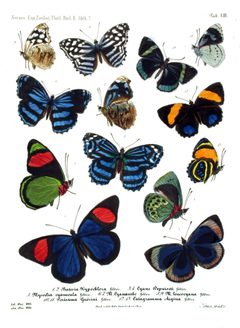
2Catonephelini is a tribe of brush-footed butterflies within the Nymphalidae. The tribe includes medium-sized to large butterflies, many of which are found in tropical and subtropical regions, particularly in the Old World tropics. Members of this tribe are characterized by reduced forelegs, a trait common to the Nymphalinae to which they belong.
Pronunciation
How to pronounce Catonephelini: /ˌkæt.oʊˌnɛf.əˈlaɪ.naɪ/
These audio files are automatically generated. While they are not always 100% accurate, they are a good starting point.
Identification
Catonephelini can be distinguished from related tribes in Nymphalinae by combinations of wing venation patterns, male genitalia structure, and larval . The tribe includes such as Catonephele, whose males often exhibit prominent eyespots on the wing surfaces. Accurate identification to tribe level requires examination of structural characters rather than coloration alone.
Images
Habitat
Members of Catonephelini inhabit tropical and subtropical forests, forest edges, and adjacent disturbed . Many are associated with humid lowland and montane forest environments.
Distribution
The tribe is distributed across the Neotropical, Afrotropical, and Indomalayan biogeographic regions. within the tribe show distinct regional patterns, with Catonephele primarily Neotropical and related genera occurring in Africa and Asia.
Diet
feed on nectar, rotting fruit, and other fermenting substances. Larvae feed on various plants, though specific associations vary by and remain incompletely documented for many .
Life Cycle
Development follows the complete typical of Lepidoptera: , larva (caterpillar), pupa (chrysalis), and . Larvae possess spiny or tuberculate bodies. Detailed data are limited for many within the tribe.
Behavior
are often encountered at fruit falls, sap flows, and damp ground. Many exhibit rapid, erratic patterns when disturbed. Some males establish territories and perch on vegetation to await females.
Ecological Role
contribute to pollination through nectar feeding. Larvae function as herbivores, consuming leaf tissue of plants. The tribe forms part of the diverse nymphalid fauna that serves as indicators of forest health.
Human Relevance
Some are collected for the ornamental trade due to their striking appearance. Members of the tribe are frequently photographed and documented by naturalists, contributing to citizen science datasets such as iNaturalist.
Similar Taxa
- JunoniiniAlso in Nymphalinae but differs in wing pattern elements and male genitalia structure; Junoniini includes familiar such as Junonia and Precis.
- NymphaliniShares Nymphalinae but typically has different larval and wing venation; includes temperate-zone familiar like the painted lady.
More Details
Taxonomic note
The tribal classification within Nymphalinae has undergone revision based on molecular phylogenetic studies. Catonephelini was established to accommodate previously placed in other groupings, reflecting improved understanding of evolutionary relationships among brush-footed butterflies.