
Eunica
Hübner, 1819
Purplewings
Species Guides
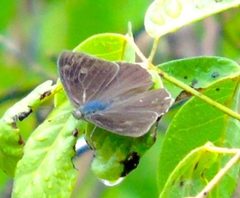
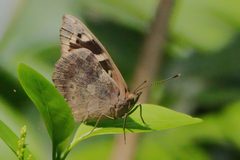
2- Eunica monima(dingy purplewing)
- Eunica tatila(Florida Purplewing)
Eunica is a of nymphalid butterflies in the Biblidinae, commonly known as purplewings. The genus contains approximately 40 distributed throughout the . Species exhibit notable variation in eyespot patterns on the hindwing surface, with phylogenetic studies indicating an evolutionary trend toward reduction in eyespot number coupled with increase in size of retained spots. Several species serve as bio-indicators of undisturbed tropical forest.

Pronunciation
How to pronounce Eunica: /juːˈnaɪkə/
These audio files are automatically generated. While they are not always 100% accurate, they are a good starting point.
Identification
Distinguished from other nymphalid by combination of: (1) eyespot patterns on hindwing (variable among ), (2) purple to brown wing coloration, and (3) Biblidinae characteristics including reduced forelegs. Species-level identification requires examination of eyespot number, size, and arrangement on ventral hindwing, as well as dorsal color pattern and presence of .
Images
Habitat
Tropical and subtropical forests, including undisturbed primary forest, forest edges, and anthropogenically disturbed areas. Some occupy savanna . Eunica tatila has been documented as a bio-indicator of undisturbed tropical forest in the Yucatan Peninsula.
Distribution
, ranging from Mexico through Central America and the Caribbean to South America. Individual ranges vary; Eunica tatila occurs in the Yucatan Peninsula and Florida.
Host Associations
- Caryocar brasiliense - plantFor Eunica bechina in Neotropical savanna
- gumbo-limbo tree - plantFor Eunica monima; used, not provided in source
Behavior
Cryptic resting posture reported for at least one (Eunica monima). UV reflective wing properties used for mate recognition in Eunica monima. Evidence of sex-biased in Eunica tatila.
Ecological Role
Eunica tatila serves as a bio-indicator of undisturbed tropical forest. Larvae of some possess defense mechanisms against .
Human Relevance
Some used as indicators of quality and forest conservation status. No significant documented economic importance.
Similar Taxa
- Other Biblidinae generaSimilar reduced forelegs and general wing shape; distinguished by eyespot patterns and coloration
More Details
Eyespot evolution
Phylogenetic analysis reveals decoupled adaptive trends: reduction in eyespot number coupled with increase in size of conserved eyespots. Most pronounced occurs in with most derived eyespot patterns.
Genetic diversity
Eunica tatila exhibits high genetic diversity with no detectable structure across the Yucatan Peninsula, despite fragmentation. Temperature and shrub correlate positively with genetic .
Sources and further reading
- BugGuide
- Wikipedia
- GBIF taxonomy match
- iNaturalist taxon
- NCBI Taxonomy
- Catalogue of Life
- Dingy Purplewing Butterfly, Eunica monima (Stoll) (Insecta: Lepidoptera: Nymphalidae: Limenitidinae)
- Hostplant record for Eunica bechina magnipunctata (Nymphalidae) and observations on oviposition sites and immature biology
- Biology and behavior of the neotropical butterfly Eunica bechina (Nymphalidae) with special reference to larval defence against ant predation
- Effect of Climatic Conditions and Land Cover on Genetic Structure and Diversity of Eunica tatila (Lepidoptera) in the Yucatan Peninsula, Mexico
- Phenological relationships ofEunica bechina(Lepidoptera: Nymphalidae) and its host plant,Caryocar brasiliense(Caryocaraceae), in a Neotropical savanna
- Wing pattern diversity in Eunica butterflies (Nymphalidae: Biblidinae): phylogenetic analysis implies decoupled adaptive trends in dorsal sexual dimorphism and ventral eyespot evolution