
Eunica tatila
Herrich-Schäffer, 1855
Florida Purplewing
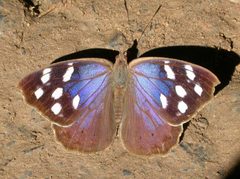
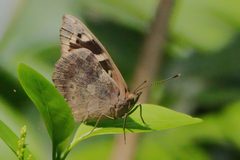
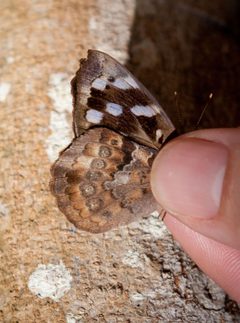
Eunica tatila is a tropical brushfoot in the Nymphalidae. It ranges from the southern United States through Central and South America to Argentina. Research in the Yucatan Peninsula indicates it serves as a bio-indicator of undisturbed tropical forest and shows evidence of sex-biased .
Pronunciation
How to pronounce Eunica tatila: //juːˈnaɪkə ˈtætɪlə//
These audio files are automatically generated. While they are not always 100% accurate, they are a good starting point.
Images
Habitat
Undisturbed tropical forest. Research in the Yucatan Peninsula confirms its association with intact forest , with genetic diversity positively correlated with surrounding forest cover and shrub .
Distribution
North and South America: southern Texas, southern Florida, Mexico (including Yucatan Peninsula), Central America, and South America to Argentina. Also recorded in Colombia.
Behavior
Exhibits sex-biased . Has migratory potential.
Ecological Role
Bio-indicator of undisturbed tropical forest. Its presence and genetic diversity correlate with integrity, making it useful for monitoring forest conservation status.
More Details
Subspecies
Four recognized: Eunica tatila tatila (nominate), E. t. bellaria (Fruhstorfer, 1908), E. t. cerula (Godman & Salvin, 1877), and E. t. tatilista (Kaye, 1926).
Genetic Research
genetic studies show high genetic diversity and no population structure across the Yucatan Peninsula, suggesting effective despite fragmentation. Temperature and shrub show positive relationships with genetic .
Taxonomic History
Originally described as Cybdelis tatila by Herrich-Schäffer in 1855; later transferred to Eunica. MONA/Hodges number 4533.