
Satyrium titus
(Fabricius, 1793)
Coral Hairstreak
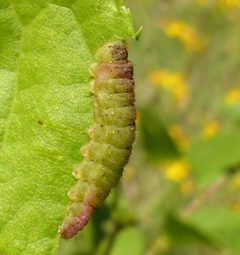
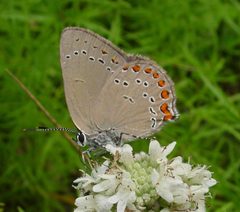
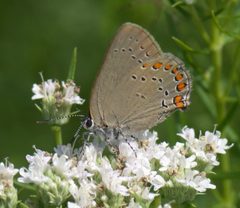
Satyrium titus, the coral , is a tailless North American in the Lycaenidae. It is distinguished from other hairstreaks by the absence of tail-like projections on the hindwings and a distinctive row of red-orange spots on the underside of the hindwing. frequent open, brushy and are often observed nectaring at butterfly weed and other flowers. Caterpillars feed primarily on the fruits of wild plums, cherries, and related woody plants in the Prunus, Amelanchier, and Quercus.
Pronunciation
How to pronounce Satyrium titus: //səˈtɪə.ɹi.əm ˈtaɪ.təs//
These audio files are automatically generated. While they are not always 100% accurate, they are a good starting point.
Identification
Distinguished from other Satyrium hairstreaks by the complete absence of hindwing tails. The red-orange marginal spots on the hindwing underside, combined with the lack of a blue spot, separate it from banded hairstreak (Satyrium calanus) and other similar . Edwards' hairstreak (Satyrium edwardsii) has tails and different spot patterns. Oak hairstreak (Satyrium favonius) has tails and different plant associations.
Images
Appearance
Upper side of wings is brownish gray. Underside of the hindwing displays a distinct row of red-orange spots along the outer margin. Lacks the tail-like projections present on most other butterflies. Lacks the blue spot typically found on the hindwing of most hairstreak .
Habitat
Brushy places, thickets, overgrown fields, open woodlands, and streamsides. Favors early successional with abundant shrubby vegetation.
Distribution
North America. Records from Vermont and throughout the United States. Range extends across eastern and central North America.
Diet
feed on nectar from weed (Asclepias tuberosa), New Jersey tea (Ceanothus americanus), dogbane (Apocynum), and sulphur flower. Caterpillars feed on fruits of wild plums and cherries (Prunus), serviceberry (Amelanchier alnifolia), and oaks (Quercus).
Host Associations
- Prunus - larval food plantfruits of wild plums and cherries
- Amelanchier alnifolia - larval food plantserviceberry
- Quercus - larval food plantoaks
- Asclepias tuberosa - nectar source weed
- Ceanothus americanus - nectar sourceNew Jersey tea
- Apocynum - nectar sourcedogbane
Life Cycle
Complete with , larva, pupa, and stages. Caterpillars feed on plant fruits. Specific not documented in available sources.
Behavior
frequently visit flowers for nectar. Has been observed nectaring at weed in particular.
Ecological Role
functions as when visiting flowers. Larval stage consumes fruits of woody shrubs and trees. Specific interactions not documented.
Human Relevance
Subject of watching and photography. Frequently observed due to its tendency to visit conspicuous nectar sources like butterfly weed.
Similar Taxa
- Satyrium calanusBanded hairstreak has hindwing tails and blue spot on hindwing underside, which S. titus lacks
- Satyrium edwardsiiEdwards' hairstreak has hindwing tails and different spot pattern on underwing
- Satyrium favoniusOak hairstreak has hindwing tails and different plant preferences