Callophrys gryneus rosneri
K. Johnson, 1976
Rosner's Hairstreak, Juniper Hairstreak
Callophrys gryneus rosneri is a of juniper hairstreak in the Lycaenidae. It is currently recognized as a synonym of Mitoura gryneus in GBIF , though iNaturalist maintains it as a distinct subspecies under Callophrys. The was described by K. Johnson in 1976. Like other juniper hairstreaks, it is associated with juniper plants.
Pronunciation
How to pronounce Callophrys gryneus rosneri: //ˈkæl.ə.frɪs ˈɡraɪ.ni.əs ˈrɒs.nɛ.ri//
These audio files are automatically generated. While they are not always 100% accurate, they are a good starting point.
Identification
Differentiation from other C. gryneus requires examination of subtle wing pattern characters and geographic provenance. The nominate subspecies C. g. gryneus occurs more broadly across eastern and central North America. C. g. rosneri has been associated with more northerly or restricted , though precise boundaries are unclear given its synonymized status in some taxonomic treatments. Genital dissection or molecular analysis may be necessary for definitive subspecific identification.
Images
Appearance
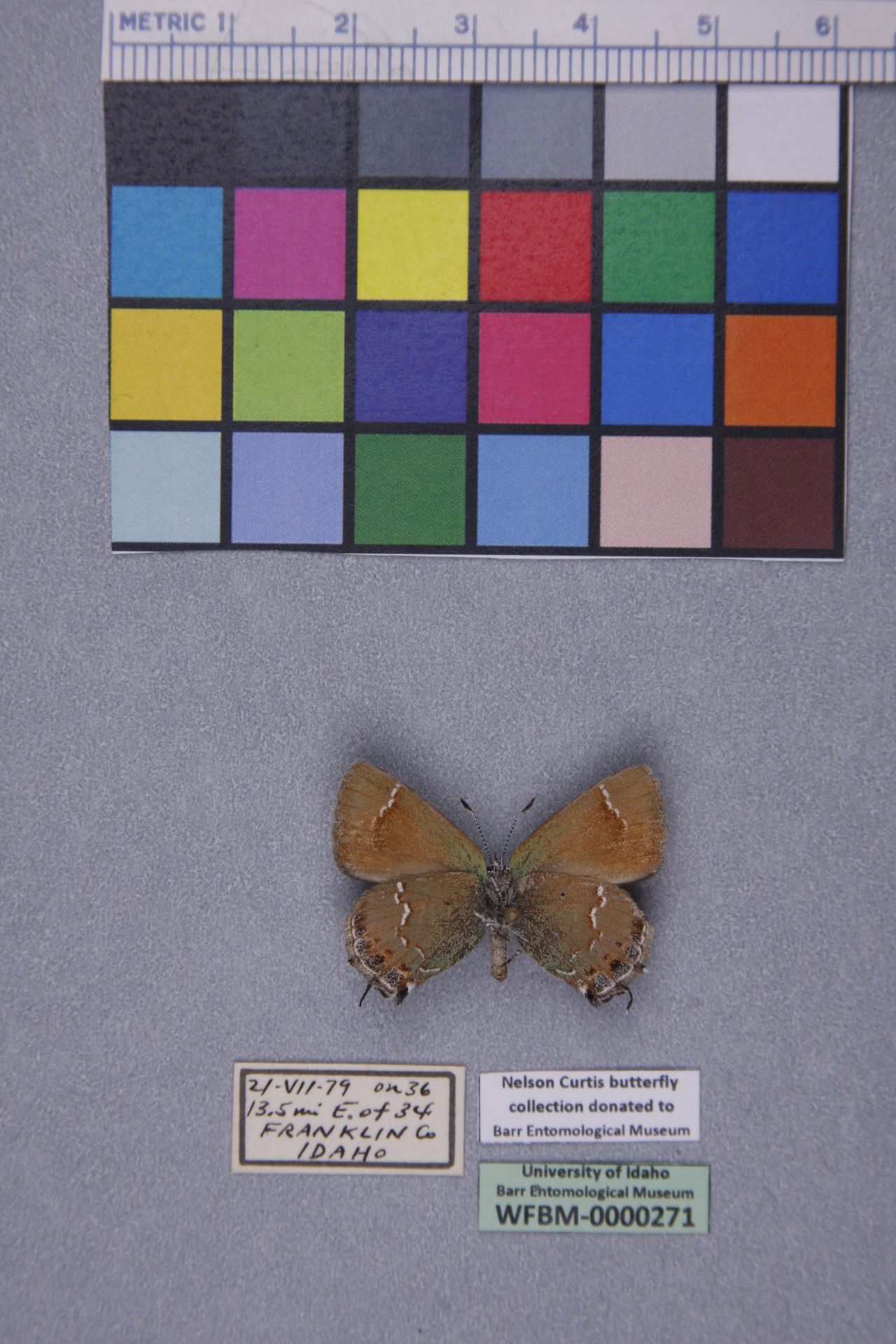
As a of the juniper hairstreak, individuals likely exhibit the characteristic greenish-olive wing coloration with white postmedian lines and reddish-brown borders typical of the . Subspecific differences may involve subtle variations in wing pattern intensity, extent of reddish markings, or body size compared to nominate C. g. gryneus. Precise diagnostic features distinguishing rosneri from other subspecies are not well documented in available sources.
Habitat
Associated with supporting juniper plants, including open woodlands, forest edges, prairies with scattered juniper, and rocky outcrops. The type locality and primary range suggest to northern or montane juniper woodlands.
Distribution
Recorded from Vermont and other parts of the United States. The subspecific epithet and original description suggest association with more northern of the juniper hairstreak complex, potentially in the northeastern United States or adjacent Canada.
Seasonality
fly in spring, with timing dependent on latitude and elevation. In northern portions of the range, likely occurs from late April through June, corresponding with juniper pollen release and new growth.
Diet
Larvae feed on Juniperus (junipers), with specific plant associations for this presumed to include native junipers within its range. nectar at flowers including milkweeds (Asclepias) and other available sources.
Host Associations
- Juniperus - larval plantSpecific juniper used by this not documented
- Asclepias engelmannii - nectar sourceObserved nectaring at Engelmann's milkweed in Oklahoma mesquite chaparral (context source indicates this for C. gryneus generally)
Life Cycle
Complete with , larva, pupa, and stages. Larvae feed on juniper foliage, likely as pupae. Single or possibly partial second depending on latitude and climate conditions.
Behavior
perch on juniper foliage with wings closed, showing cryptic green undersides. Males establish territories and perch on plants to await females. Adults are rapid, erratic fliers when disturbed. Visits flowers for nectar, particularly in afternoon hours.
Ecological Role
Larval herbivore on junipers; contributes to nutrient cycling and serves as prey for and . function as when nectaring. Part of the guild associated with coniferous and mixed woodlands.
Human Relevance
Subject of lepidopterological interest due to taxonomic complexity of the C. gryneus group. Potential indicator of juniper woodland health. Observed by citizen scientists and documented on iNaturalist.
Similar Taxa
- Callophrys gryneus gryneusNominate ; differences subtle and require careful examination of wing patterns and genitalia; geographic separation may assist identification where ranges do not overlap
- Callophrys affinisWestern green hairstreak; occurs in different geographic region (western North America) with different plant associations
- Callophrys niphonEastern pine elfin; smaller size, different plants (pines), more restricted eastern distribution
Misconceptions
The taxonomic status of C. g. rosneri is unsettled. GBIF treats it as a synonym of Mitoura gryneus, while iNaturalist maintains it as a valid under Callophrys. This reflects ongoing debate about generic placement (Callophrys vs. Mitoura) and subspecific validity within the gryneus complex.
More Details
Taxonomic Uncertainty
This exemplifies broader taxonomic challenges in the C. gryneus . Some authorities recognize multiple subspecies; others synonymize them. The GBIF-iNaturalist discrepancy highlights lack of consensus on both generic and subspecific boundaries.
Conservation Status
Not separately assessed; included within broader evaluations of C. gryneus or Mitoura gryneus. Potential vulnerability due to loss and fragmentation of juniper woodlands in northeastern North America.