
Pyrgus ruralis
(Boisduval, 1852)
Two-banded Checkered-Skipper, Two-banded Checkered Skipper
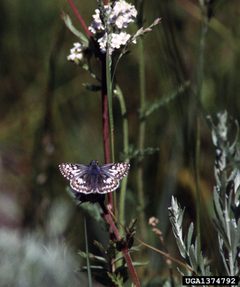
Pyrgus ruralis is a small in the Hesperiidae, commonly known as the two-banded checkered skipper. It occurs across western North America from southern British Columbia and the Rocky Mountains south to central California, Nevada, Utah, Colorado, Arizona, and New Mexico. The has one annually, with active from April to July. A federally endangered , P. r. lagunae (Laguna Mountains skipper), persists in a restricted range in the mountains east of San Diego, California.
Pronunciation
How to pronounce Pyrgus ruralis: //ˈpɪr.ɡəs ruː.ˈræ.lɪs//
These audio files are automatically generated. While they are not always 100% accurate, they are a good starting point.
Identification
Distinguished from other Pyrgus by the two-banded forewing pattern and geographic range. Similar checkered skippers in the same may overlap in range; examination of genitalia or detailed wing pattern analysis may be required for definitive identification. The endangered lagunae is restricted to the Laguna Mountains and has been subject to specific taxonomic study. are small and rapid-flying, with typical skipper characterized by quick, darting movements interspersed with short glides.
Images
Habitat
Montane and subalpine meadows, open grassy areas, and forest clearings. Found in association with its larval plants in the rose . Occurs from low elevations in the northern part of its range to high elevations in the south, including mountain above 5,000 feet in southern California.
Distribution
Western North America: southern British Columbia, southwestern Alberta (Rocky Mountains), south through Washington, Oregon, Nevada, Utah, Colorado, and California to Arizona and New Mexico. The lagunae is restricted to the Laguna Mountains east of San Diego, California.
Seasonality
(one per year). emerge and are active from April to July, with peak activity varying by elevation and latitude. Earlier periods at lower elevations and southern latitudes; later at higher elevations.
Diet
Larvae feed on herbaceous plants in the rose (Rosaceae), specifically: Potentilla drummondii, Horkelia fusca, Horkelia tenuiloba, and Horkelia bolanderi clevelandii. feed on flower nectar from available blooming plants in their montane meadow .
Host Associations
- Potentilla drummondii - larval foodplant
- Horkelia fusca - larval foodplant
- Horkelia tenuiloba - larval foodplant
- Horkelia bolanderi clevelandii - larval foodplant
Life Cycle
Complete with four stages: , larva, pupa, . Larvae feed on plants in Rosaceae, developing through several instars. occurs in a silken shelter on or near the host plant. stage not explicitly documented in sources but likely as pupa or late-instar larva given . Adults emerge in spring to early summer, mate, and females oviposit on host plants.
Behavior
are and rapid-flying, characteristic of skippers. Males likely perch on vegetation to await females, a common mating strategy in the . Adults visit flowers for nectar, facilitating pollination. Specific territorial or courtship not documented in available sources.
Ecological Role
of montane meadow flowers through nectar-feeding. Larvae function as herbivores, consuming Rosaceae foliage. Serves as prey for insectivorous birds, spiders, and other arthropods. The endangered lagunae represents a component of restricted biodiversity in the Laguna Mountains .
Human Relevance
Subject of conservation concern due to the federally endangered status of lagunae. loss and degradation threaten the restricted Laguna Mountains . The is of interest to lepidopterists and watchers. No significant agricultural or economic impact; not considered a pest species.
Similar Taxa
- Pyrgus communis (Common Checkered-Skipper)Overlapping range and similar checkered wing pattern, but P. communis has more extensive white markings and lacks the two distinct forewing bands; also more widespread in open including disturbed areas
- Other Pyrgus speciesMany share checkered wing patterns; precise identification requires examination of wing pattern details, genitalia, or geographic context
More Details
Subspecies
Two recognized: Pyrgus ruralis ruralis (widespread nominate form) and Pyrgus ruralis lagunae (Laguna Mountains skipper). The latter is federally endangered in the United States, restricted to a small area in the Laguna Mountains of southern California. The subspecies lagunae has been subject to intensive conservation study and management efforts.
Conservation Status
The nominate is not considered threatened. P. r. lagunae was listed as endangered due to loss from fire suppression, development, and recreational activity in its restricted mountain meadow habitat. Recovery efforts have included habitat restoration and monitoring of trends.
Sources and further reading
- BugGuide
- Wikipedia
- GBIF taxonomy match
- iNaturalist taxon
- NCBI Taxonomy
- Catalogue of Life
- New Technique May Help Farmers Identify the European Corn Borer
- Nota Lepidopterologica goes advanced open access with Pensoft Publishers | Blog
- Bug Eric: White Prairie Clover: An Awesome Blossom
- Provisional checklist of European butterfly larval foodplants
- Uncategorized | Blog - Part 49
- Bug Eric: March 2009