
Heliopyrgus
Herrera, 1957
Species Guides
2- Heliopyrgus domicella(Erichson's white-skipper)
- Heliopyrgus sublinea(East-Mexican white-skipper)
Heliopyrgus is a of in the Hesperiidae, Pyrginae. It was described by Herrera in 1957. The genus is taxonomically disputed, with some authorities treating it as a subgenus of Heliopetes rather than a distinct genus. within this group are found in the Americas.

Pronunciation
How to pronounce Heliopyrgus: //ˌhɛ.li.oʊˈpɪr.ɡəs//
These audio files are automatically generated. While they are not always 100% accurate, they are a good starting point.
Identification
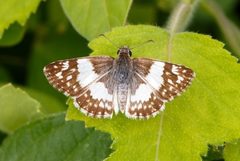
Heliopyrgus are distinguished from related primarily through male genitalia , particularly the structure of the uncus and gnathos. Wing patterns generally feature checkered or spotted markings on a brown or orange-brown ground color. The forewings are typically more triangular than those of many other Pyrginae, with a characteristic costal fold in males.
Images
Distribution
of Heliopyrgus occur in the Americas, with records from North America through Central America to South America. Specific range boundaries for the as a whole are poorly documented due to ongoing taxonomic revision and confusion with Heliopetes.
Similar Taxa
- HeliopetesHeliopyrgus is frequently treated as a subgenus of Heliopetes rather than a separate ; are nearly identical in external appearance and require genital dissection for reliable separation
- PyrgusBoth share checkered wing patterns and similar size, but Pyrgus have more rounded forewing apices and different male genitalia structure
More Details
Taxonomic status
The rank of Heliopyrgus remains unsettled. GBIF and Catalogue of Life recognize it as a , while NCBI and iNaturalist classify it as a subgenus of Heliopetes. This disagreement reflects broader instability in skipper .