
Heliopetes laviana
(Hewitson, 1868)
Laviana White-Skipper, Laviana skipper
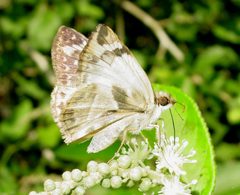
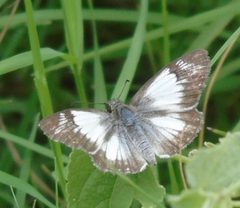
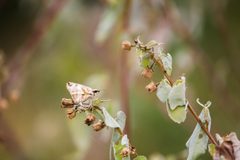
A small in the Hesperiidae, occurring from Argentina through Central America to the southern United States. have a wingspan of 35–42 mm and feed on flower nectar. Larvae construct nests from folded leaves of mallow plants and feed on foliage. Multiple occur annually in southern Texas.
Pronunciation
How to pronounce Heliopetes laviana: //ˌhɛli.oʊˈpiːtiːz læˈviːənə//
These audio files are automatically generated. While they are not always 100% accurate, they are a good starting point.
Identification
A small white-skipper with wingspan 35–42 mm. Distinguished from other Heliopetes by specific wing pattern characteristics (detailed requires examination of wing markings). The "white-skipper" refers to pale areas on the wings. Similar to other Pyrginae skippers but with range and preferences overlapping multiple .
Images
Habitat
Edges of brushy areas, trails, roadsides, open woodland, thorn forest, and streamsides.
Distribution
Native range extends from Argentina through Central America and northern Mexico to southern Texas, USA. Strays recorded in southern Arizona and central and northern Texas.
Seasonality
Multiple per year in southern Texas; active year-round in tropical portions of range with peak activity varying by latitude.
Diet
feed on flower nectar. Larvae feed on leaves of various mallows (Malvaceae), specifically Sphaeralcea, Sida, and Abutilon .
Life Cycle
Larvae live in nests constructed from folded leaves. Multiple per year in northern parts of range.
Behavior
Larvae construct and reside in nests of folded leaves. visit flowers for nectar.
Ecological Role
as ; herbivore as larva on Malvaceae.
Similar Taxa
- Heliopetes macairaOverlapping range in Central America and Texas; distinguished by wing pattern details
- Heliopetes ericetorumSimilar preferences in North American range; requires close examination for separation