
Erynnis zarucco
(Lucas, 1857)
Zarucco Duskywing
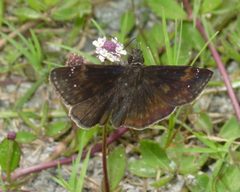
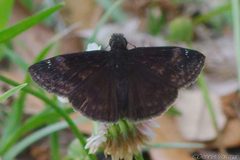
Erynnis zarucco is a in the Hesperiidae, distributed from southern Ontario through the southeastern United States. have a wingspan of 32–38 mm and exhibit dark, muted coloration typical of duskywing skippers. The has multiple annually, with three in the deep south and two in northern portions of its range. Larvae feed on Fabaceae, including both woody and herbaceous members of this plant family.
Pronunciation
How to pronounce Erynnis zarucco: /ɛˈrɪnɪs zəˈrʊkoʊ/
These audio files are automatically generated. While they are not always 100% accurate, they are a good starting point.
Identification
Most reliably distinguished from similar Erynnis by geographic range and period in combination with plant association. hindwing pattern and specific spot configuration may aid separation from E. horatius and E. juvenalis, though these species overlap in range and require careful examination. E. zarucco tends to have fewer and smaller pale forewing spots than some . Definitive identification often requires examination of genitalia or association with documented larval host plants.
Images
Appearance
Wingspan 32–38 mm. Dark brown to blackish overall coloration with muted patterning typical of duskywing skippers. Forewings relatively broad with small pale spots. Hindwings with reduced or absent pale markings compared to some . Body robust, densely scaled. with hooked clubs, characteristic of Hesperiidae. Sexes similar in appearance.
Habitat
Open areas including prairies, glades, barrens, and woodland edges where larval plants (Fabaceae) occur. Associated with xeric to mesic in the eastern and central United States.
Distribution
Southern Ontario southward through the eastern and central United States to the southeastern states. Records from the Caribbean and Middle America per GBIF, though primary range is North American.
Seasonality
active from spring through summer. Two in northern portions of range; three generations in the deep south.
Diet
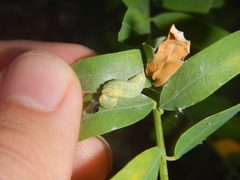
Larvae feed on Fabaceae, including both tree and herbaceous . Specific documented include various leguminous plants; nectar sources not specifically documented in available sources.
Host Associations
- Fabaceae - larval food plantincludes tree and herbaceous
Life Cycle
Complete with multiple annually. , larva, pupa, stages. Larvae feed on Fabaceae plants. likely occurs in leaf litter or soil, though specific details not documented.
Ecological Role
as ; herbivore as larva. Contributes to as prey for birds, spiders, and other .
Similar Taxa
- Erynnis horatiusSimilar size, coloration, and range; E. horatius flies throughout summer while E. juvenalis is restricted to early spring; hindwing spot patterns differ
- Erynnis juvenalisEarly spring period overlaps; E. juvenalis has one or two dots on hindwing that E. horatius lacks; E. zarucco distinguished by association and spot configuration
- Erynnis brizoSimilar dark coloration and preference; distinguished by geographic range and plant association with oak
More Details
Taxonomic note
Originally described by Lucas in 1857. The specific epithet 'zarucco' is of unclear etymology.
Conservation status
Described as 'rarely' found in portions of its range, though iNaturalist records suggest it may be underreported rather than genuinely rare.