
Erynnis pacuvius
(Lintner, 1878)
Pacuvius Duskywing, Dyar's Duskywing, Buckthorn Duskywing
Erynnis pacuvius is a in the Hesperiidae, found in western North America. The has a wingspan of 29–33 mm and exhibits a period between June and July in northern , with a second occurring in southern portions of its range. Larvae feed on Ceanothus species.
Pronunciation
How to pronounce Erynnis pacuvius: //ɛˈrɪn.nɪs pəˈkuː.vi.əs//
These audio files are automatically generated. While they are not always 100% accurate, they are a good starting point.
Identification
Identification to within the Erynnis requires examination of wing pattern details, particularly the arrangement of pale spots on the forewing and hindwing, and often necessitates close inspection or capture for reliable determination. E. pacuvius may be distinguished from other western Erynnis species by geographic range and period, though specific diagnostic characters are not provided in available sources.
Images
Appearance
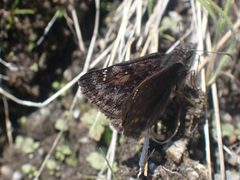
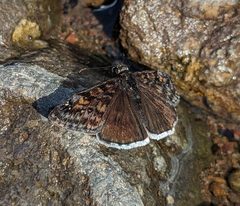
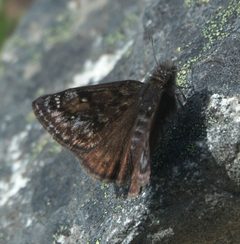
Small to medium-sized skipper with a wingspan of 29–33 mm. Duskywing skippers in the Erynnis typically have dark brown to blackish wings with small pale spots or bands; specific markings for E. pacuvius are not detailed in available sources.
Habitat
Associated with supporting larval plants in the Ceanothus, which includes chaparral, woodland edges, and open slopes in western North America. Specific habitat preferences for are not documented.
Distribution
Western North America: southern British Columbia, Canada, and most of the western United States. Distribution records also indicate presence in Middle America, though specific localities are not detailed.
Seasonality
fly between June and July in northern portions of the range. Southern produce a second , extending the period later in the season.
Diet
Larvae feed on Ceanothus (Rhamnaceae). feeding habits are not documented.
Host Associations
- Ceanothus - larval food plantMultiple in this are used as plants
Life Cycle
Complete with , larva, pupa, and stages. Larval development occurs on Ceanothus plants. Specific details on number of , stage, and sites are not documented.
Behavior
activity occurs during daylight hours. Specific behavioral observations such as perching habits, territoriality, or mating are not documented.
Ecological Role
Larvae function as herbivores on Ceanothus shrubs. may contribute to pollination, though this has not been quantified. The serves as prey for various .
Human Relevance
No documented economic importance or direct human interactions. The is of interest to lepidopterists and naturalists in western North America.
Similar Taxa
- Erynnis tristisAnother western North American duskywing with overlapping range; separation requires careful examination of wing patterns
- Erynnis propertiusWestern duskywing ; E. propertius has been recorded in early spring in California, potentially overlapping in range with E. pacuvius
More Details
Taxonomic Note
The was described by Lintner in 1878. Multiple reflect historical confusion or regional naming conventions: 'Pacuvius duskywing,' 'Dyar's duskywing,' and 'buckthorn duskywing' (the latter presumably referencing the plant Rhamnaceae, which includes Ceanothus and the true buckthorns in Rhamnus).