
Erynnis tristis
(Boisduval, 1852)
Mournful Duskywing
Erynnis tristis, the mournful duskywing, is a spread-wing skipper in the Hesperiidae. It is broadly distributed across the Americas, with documented presence in North, Central, and South America. The shows notable flexibility, occurring in both natural and urban environments. nectar from diverse flower sources while larvae develop on oak foliage.
Pronunciation
How to pronounce Erynnis tristis: //ɪˈrɪn.nɪs ˈtrɪs.tɪs//
These audio files are automatically generated. While they are not always 100% accurate, they are a good starting point.
Identification
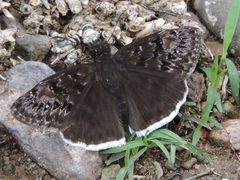
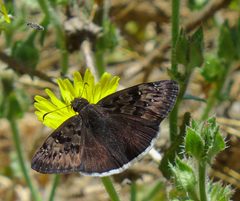
Similar to Erynnis funeralis (funereal duskywing), but more frequently encountered in urban and suburban settings. The white hindwing fringe is a key visual marker. Definitive separation from closely related Erynnis may require examination of genitalia or detailed wing pattern analysis.
Images
Appearance
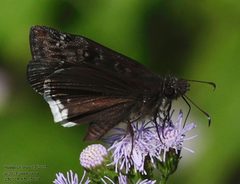
Mottled brown wings with a white fringe on the hindwings. As a spread-wing skipper, it perches with wings held partially open rather than folded vertically.
Habitat
Occurs in diverse environments including oak woodlands, scrublands, and notably urban and suburban areas. Shows greater for developed landscapes than some .
Distribution
Documented from North America, Central America, and South America. GBIF records confirm presence across Middle America, North America, and South America.
Diet
Larvae feed on young oak leaves (Quercus spp.). nectar from a variety of wild and cultivated flowers.
Host Associations
- Quercus - larval young foliage
Behavior
are active nectarers at flowers. Urban demonstrate behavioral flexibility in utilizing anthropogenic resources.
Ecological Role
serve as through nectar-feeding activities. Larvae function as herbivores on oak foliage.
Human Relevance
Frequently observed in gardens and urban green spaces, making it one of the more accessible duskywing for watchers. No documented economic or agricultural significance.
Similar Taxa
- Erynnis funeralisNearly identical wing pattern; distinguished by preference (E. tristis more urban) and subtle wing markings
More Details
Nomenclature
Original description by Boisduval in 1852. Three currently recognized, differentiated by geographic distribution and subtle morphological traits.