
Amblyscirtes oslari
(Skinner, 1899)
Oslar's Roadside-Skipper, Oslar's roadside skipper
Amblyscirtes oslari, commonly known as Oslar's Roadside-Skipper, is a small in the Hesperiidae. It occupies a broad range across the North American Great Plains and Rocky Mountains, from southern Canada to the southwestern United States. The exhibits latitudinal variation in its , with a single in northern and two generations in southern populations. Both larval and stages have documented associations: larvae feed exclusively on blue grama grass, while adults visit flowers for nectar.
Pronunciation
How to pronounce Amblyscirtes oslari: /ˌæmblɪˈskɜrtiːz ˈoʊzlæraɪ/
These audio files are automatically generated. While they are not always 100% accurate, they are a good starting point.
Identification
Distinguished from other Amblyscirtes by geographic range and preference. Within its range, may be confused with other roadside skippers; specific diagnostic characters not detailed in available sources. The combination of small size (22–35 mm wingspan), grassland habitat in the Great Plains and Rocky Mountain regions, and period from May to July may aid in field identification.
Images
Appearance
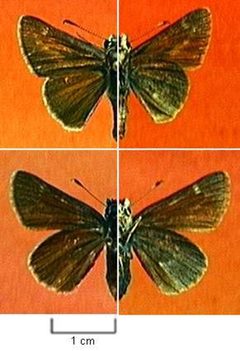
Small with wingspan of 22–35 mm. Typical skipper with relatively large , stocky body, and hooked clubs. Wing pattern and coloration details not explicitly described in available sources.
Habitat
Occupies high plains and Rocky Mountain , including grasslands and open areas. Associated with blue grama grass (Bouteloua gracilis), the larval plant, which is a grass in shortgrass prairie . have been observed in roadside environments and open grassy areas.
Distribution
North America from southern Alberta and Saskatchewan in Canada, south through North Dakota, the high plains and Rocky Mountains to Arizona, New Mexico, and south Texas in the United States.
Seasonality
are active from May to July. One per year occurs in northern parts of the range; two generations per year in southern parts.
Diet
Larvae feed exclusively on blue grama grass (Bouteloua gracilis). feed on flower nectar; recorded visiting Penstemon, Cirsium (thistles), and Verbena.
Host Associations
- Bouteloua gracilis - larval blue grama grass; sole documented larval food plant
- Penstemon - nectar source
- Cirsium - nectar sourcethistle
- Verbena - nectar source
Life Cycle
Complete with , larva, pupa, and stages. One annually in northern range (Canada, northern Great Plains); two generations annually in southern range (Arizona, New Mexico, Texas). Specific details of egg, larval, and pupal stages not documented in available sources.
Behavior
are and visit flowers for nectar. Males of related Amblyscirtes have been observed perching in low areas early in the morning, though this has not been explicitly documented for A. oslari.
Ecological Role
Larvae function as herbivores on native grasses. may contribute to pollination of flowering plants while feeding on nectar. Serves as prey for various including birds, spiders, and other arthropods.
Human Relevance
No significant documented economic or agricultural impact. Of interest to lepidopterists and naturalists due to its restricted association with native prairie . Not known to be a pest .
Similar Taxa
- Amblyscirtes nysaSimilar (Nysa Roadside-Skipper) and preference; distinguished by different geographic range (more southeastern, extending into Oklahoma, Kansas, and Texas but not reaching the northern Great Plains or Rocky Mountains)
- Amblyscirtes hegonAnother roadside skipper in the same with overlapping range in parts of the Great Plains; specific distinguishing characters not detailed in available sources
More Details
Nomenclatural History
Originally described as Pamphila oslari by Skinner in 1899. Has been placed in the Mastor by some authorities, but currently accepted as Amblyscirtes oslari.
Conservation Status
Not formally assessed by major conservation organizations. Dependence on native shortgrass prairie may make vulnerable to habitat conversion and degradation.