Polites sonora
(Scudder, 1872)
Sonoran skipper, western long dash
Polites sonora is a small in the Hesperiidae found along the Pacific coast of North America. It has a wingspan of 25–27 mm and exhibits one annually in Canada, flying from mid-July to mid-August. Research indicates this overwinters as , with snowpack providing insulating protection that positively influences success. Climate change poses significant threats through warming winters and reduced snow cover.

Pronunciation
How to pronounce Polites sonora: //pəˈlaɪtiːz soʊˈnoʊrə//
These audio files are automatically generated. While they are not always 100% accurate, they are a good starting point.
Identification
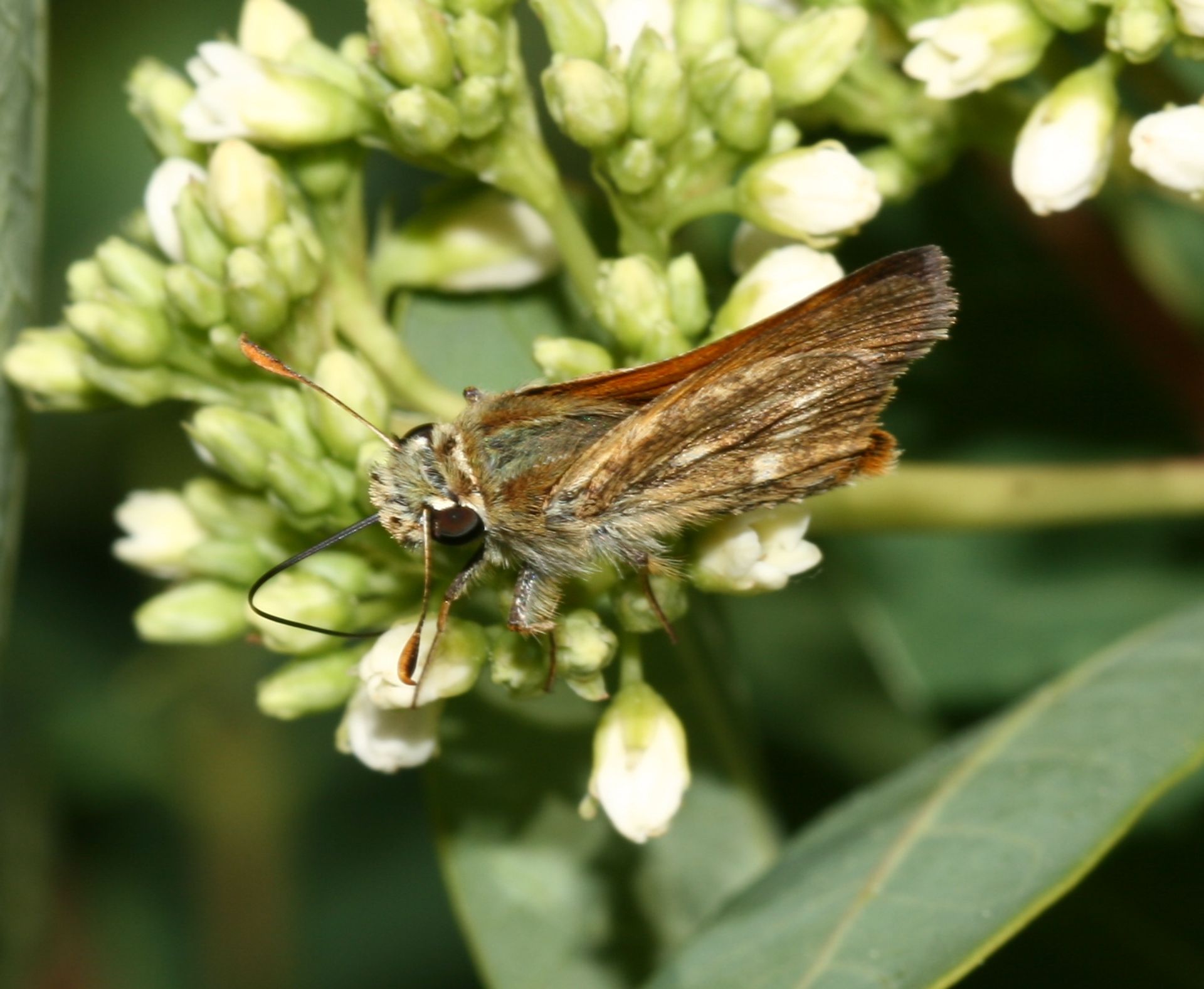
Distinguished from similar Polites by combination of size, geographic range along Pacific coast, and wing pattern details. The pale "long dash" marking on the forewing helps separate it from . Males have shorter with less prominent hooks compared to females, and darker triangular versus the pale, square faces of males.
Images
Appearance
Small with wingspan 25–27 mm. The exhibits typical hesperiid : stocky body, relatively large , and with hooked clubs. The "western long dash" refers to a characteristic pale marking on the forewing.
Habitat
Montane and coastal grassland . Associated with grassy areas where larval grasses occur. In the Sierra Nevada, found at high elevations where snowpack provides critical insulation for .
Distribution
Pacific coast of the United States from southern California northward; reaches Canada only in the extreme southern interior of British Columbia. Also documented in Nevada, Utah, Arizona, and New Mexico.
Seasonality
One annually in Canada, flying from mid-July to mid-August. period corresponds with availability of nectar sources including white-flowered thistles.
Diet
Larvae feed on grasses, with Festuca idahoensis (Idaho fescue) documented as a possible . feed on nectar from flowers, specifically recorded from white-flowered thistles.
Host Associations
- Festuca idahoensis - larval food plantIdaho fescue; possible grass
- Cirsium - nectar sourcewhite-flowered thistles
Life Cycle
Overwinters as . Snowpack insulates eggs, with greater snow depth correlating with higher success. Single in northern portions of range; likely multivoltine farther south.
Behavior
visit flowers for nectar. Research indicates stage is particularly sensitive to winter minimum temperatures and snow cover duration.
Ecological Role
function as when visiting flowers. Larvae are herbivores on native grasses. Serves as a study organism for understanding climate change impacts on montane insect .
Human Relevance
Subject of climate change research in the Sierra Nevada. Documented in long-term monitoring studies examining how strategy mediates responses to warming winters and declining snowpack.
Similar Taxa
- Polites dracoSimilar size and ; occurs in montane western North America but distinguished by wing pattern and geographic distribution
- Polites mysticFormerly treated as or closely related; now recognized as distinct or synonym depending on taxonomic treatment
More Details
Climate change vulnerability
Research by Halsch et al. identifies P. sonora as particularly vulnerable to warming winters due to its - strategy. Warmer minimum temperatures reduce success, while reduced snowpack eliminates insulating protection for overwintering eggs. This makes the a valuable indicator for montane responses to climate change.
Subspecies
Four recognized: P. s. sonora (nominate), P. s. siris (Dog Star skipper), P. s. utahensis, and P. s. flaviventris. Subspecies vary in distribution and possibly in ecological requirements.
Sources and further reading
- BugGuide
- Wikipedia
- GBIF taxonomy match
- How Climate Change is Affecting Insect Biodiversity
- Destination Sonoran Desert: A time to sting for the Giant Hairy Desert Scorpion, 'Hadrurus arizonensis' — Bug of the Week
- The best species name ever! | Beetles In The Bush
- Bug Eric: April 2010
- Bug Eric: Spider Sunday: Giant Crab Spider
- Bug Eric: Wasp Wednesday: Polistes flavus