
Ochlodes sylvanoides
(Boisduval, 1852)
Woodland Skipper
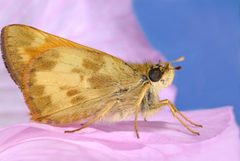
Ochlodes sylvanoides, the Woodland Skipper, is a small orange-brown found across western North America. are active from midsummer through fall and feed on flower nectar. Larvae develop on various grass in the Poaceae. The species occupies diverse including woodlands, grasslands, and urban gardens.


Pronunciation
How to pronounce Ochlodes sylvanoides: /ˈɔk.loʊ.diːz sɪlvəˈnɔɪdiːz/
These audio files are automatically generated. While they are not always 100% accurate, they are a good starting point.
Identification
Distinguished from similar skippers by orange upperside with dark borders combined with small size. Male androconia and female forewing markings provide sex-specific characters. Light brown underside with pale spots separates it from darker or more boldly patterned . is rapid and darting, characteristic of Hesperiidae.
Images
Appearance
Wingspan 25–32 mm. Upperside of wings orange with dark borders. Males possess black androconial on forewings; females display two dark markings on forewings. Underside variable, generally light brown with lighter spots. Body compact with relatively large , typical of skippers.
Habitat
Occurs in diverse environments including woodlands, grasslands, meadows, and urban gardens. Requires presence of larval grasses and nectar sources. Tolerates disturbed and semi-natural .
Distribution
Western North America from British Columbia south to southern California, east to Montana, Colorado, and Arizona. Records extend into Alberta and Saskatchewan, Canada. Multiple described occupy specific geographic regions including coastal Oregon, Nevada, and California.
Seasonality
active midsummer through fall. period varies with elevation and latitude; peak activity typically August–September in most of range.
Diet
Larvae feed on various Poaceae including Cynodon dactylon, Phalaris, Elymus, and Agropyron. feed on flower nectar from diverse plant species including Epilobium and garden plantings such as English lavender.
Host Associations
- Cynodon dactylon - larval food plant
- Phalaris - larval food plant
- Elymus - larval food plant
- Agropyron - larval food plant
Behavior
is rapid, low, and darting. frequently visit flowers for nectar. Males use androconial for during courtship.
Ecological Role
serve as when feeding on nectar. Larvae function as primary consumers, converting grass to animal tissue. Serves as prey for birds, spiders, and other .
Human Relevance
Occasional garden visitor; photographed on ornamental plants including lavender. Subject of long-term monitoring studies in California. Included in research documenting 1.6% decline in western North American populations associated with climate change.
Similar Taxa
- Ochlodes agricolaSimilar size and coloration; distinguished by distribution and subtle wing pattern differences
- Hylephila phyleusFiery Skipper shares orange coloration but has more extensive dark markings and different pattern
- Poanes melaneUmber Skipper darker brown, lacks bright orange upperside
More Details
Subspecies
Eight described: O. s. sylvanoides (California, Mexico), O. s. pratincola, O. s. napa, O. s. bonnevilla (Bonneville skipper, Nevada), O. s. orecoasta (Oregon coast skipper), O. s. santacruza (northern California), O. s. omnigena (Nevada, Great Basin), and O. s. catalina. Subspecies distinguished by minor wing pattern and size differences correlated with geography.
Population Trends
Long-term monitoring by Art Shapiro and colleagues documents regional fluctuations. not among those showing consistent steep decline in recent analyses, though subject to same climate pressures affecting western fauna.