
Ochlodes agricola
(Boisduval, 1852)
Rural Skipper
Ochlodes agricola, commonly known as the rural skipper, is a grass in the Hesperiidae. It is found in North America, particularly in mid-elevation and foothills. The has been identified as declining in western North American , with studies documenting a 1.6% reduction in numbers across the region associated with warming fall temperatures.

Pronunciation
How to pronounce Ochlodes agricola: //ˈɒkləʊdiːz ˌæɡrɪˈkoʊlə//
These audio files are automatically generated. While they are not always 100% accurate, they are a good starting point.
Identification
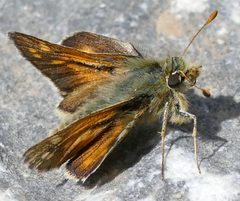
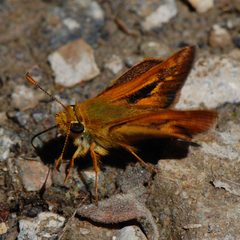
are distinguished by ochre-orange coloration with diagonal black forewing markings in males. The underside of hindwings varies from solid orange to brown-mottled. Similar to other Ochlodes ; distinguished from Ochlodes sylvanoides (woodland skipper) by preference—O. agricola occupies mid-elevation and foothill areas rather than woodland edges.
Images
Habitat
Mid-elevation and foothills. Vegetation typically includes dry grasses and associated flora.
Distribution
North America, with presence documented in the western United States. The occurs across mid-elevation zones and foothill regions.
Diet
Larvae feed on grasses. food sources not specified in available sources.
Host Associations
- grasses - larval food plantSpecific grass not identified in sources
Life Cycle
Larval stage characterized by yellow body with black lines and black . Complete with , larva, pupa, and stages; specific timing of developmental stages not documented.
Behavior
males display territorial . General adult activity patterns not detailed.
Ecological Role
Herbivore as larvae, consuming grasses. Role in pollination not documented. Part of declining western North American fauna, with trends serving as indicator of climate change impacts.
Human Relevance
Subject of long-term monitoring by researchers including Art Shapiro at UC Davis. Identified as one of fifty declining in at least two datasets used in climate change impact studies. No direct economic or cultural significance documented.
Similar Taxa
- Ochlodes sylvanoidesWoodland skipper; distinguished by preference (woodland edges vs. mid-elevation/foothills for O. agricola)
More Details
Population Decline
Documented as declining in western North American with 1.6% reduction between 1977-2018, associated particularly with warming fall temperatures.
Taxonomic Authority
Originally described as Hesperia agricola by Boisduval in 1852.
Subspecies
Three recognized: O. a. agricola, O. a. nemorum, and O. a. verus.