
Datana perspicua
Grote & Robinson, 1865
spotted datana, spotted datana moth
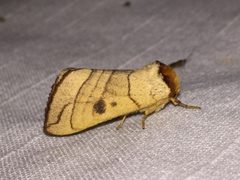
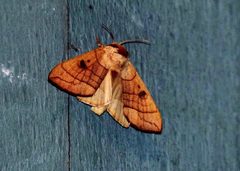
Datana perspicua, the spotted datana, is a of prominent in the Notodontidae. It was described by Augustus Radcliffe Grote and Coleman Townsend Robinson in 1865. The species is found in North America and has been assigned MONA/Hodges number 7908. Three are recognized: D. p. mesillae, D. p. opposita, and the nominate D. p. perspicua.
Pronunciation
How to pronounce Datana perspicua: /dɑːˈtɑːnə pərˈspɪkjuːə/
These audio files are automatically generated. While they are not always 100% accurate, they are a good starting point.
Images
Distribution
North America. The has been recorded in the United States, including Arizona where it has been observed in the Chiricahua Mountains and other southeastern Arizona localities.
Diet
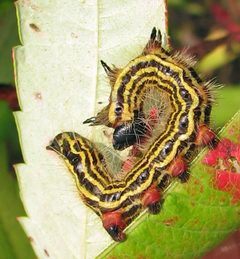
Larvae feed on leaves of plants. Specific host plant records for this are not documented in the provided sources, though other Datana species are known to feed on various woody plants.
Life Cycle
Complete with , larva, pupa, and stages. Specific details of the for this are not documented in the provided sources.
Ecological Role
Larval stage functions as a folivore (leaf-feeder). may serve as when nectaring. The is documented as prey for the thread-waisted wasp Ammophila procera.
Similar Taxa
- Datana integerrimaWalnut caterpillar, another in the same with similar larval and appearance; both are late-season defoliators of hardwood trees.
- Other Datana speciesMembers of this share similar and as prominent larvae that feed on woody plants.
More Details
Subspecies
Three are recognized: Datana perspicua mesillae Cockerell, 1897; Datana perspicua opposita Barnes & Benjamin, 1927; and Datana perspicua perspicua Grote & Robinson, 1865.
Predation
Documented as prey for the thread-waisted wasp Ammophila procera, which paralyzes caterpillars to provision its nest .
Sources and further reading
- BugGuide
- Wikipedia
- GBIF taxonomy match
- iNaturalist taxon
- NCBI Taxonomy
- Catalogue of Life
- Insects and mites that feed on leaves - AgriLife Extension Entomology
- Bug Eric: Wasp Wednesday: Ammophila procera
- Much Ado About Nothing? End-of-Summer Defoliation Heats Up
- Bug Eric: November 2010
- 2018 Arizona Insect Collecting Trip “iReport” | Beetles In The Bush