
Notodontinae
Stephens, 1829
Prominent moths
Genus Guides
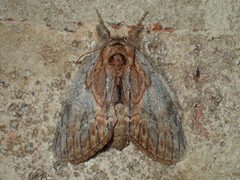
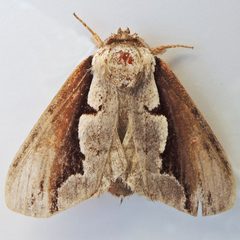
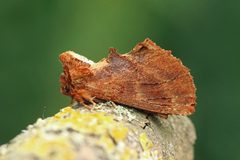
6Notodontinae is the nominate of the Notodontidae, established by Stephens in 1829. It represents a diverse group of prominent moths distributed across multiple continents. The subfamily's circumscription remains provisional, with the related Ptilodoninae sometimes merged herein and not all notodontid yet assigned to subfamilies. Recent molecular phylogenetic studies have sought to clarify evolutionary relationships within the group.
Pronunciation
How to pronounce Notodontinae: /nɔt̪ɔˈdɔnt̪inə/
These audio files are automatically generated. While they are not always 100% accurate, they are a good starting point.
Images
Habitat
Members of Notodontinae occupy diverse terrestrial . The Australian Gallaba inhabits forests, woodlands, and heathlands from sea level to montane forests reaching at least 1650 m elevation. In the Caucasus and Pontic Mountains region, notodontine occur in Euxine-Colchic broadleaf forests, mixed forests, lowland steppe, and montane zones. Tasmanian endemics occupy mesic montane and subalpine environments.
Distribution
Notodontinae has a broad geographic distribution spanning multiple continents. In Australia, the Gallaba is confined to eastern and southern regions, with Tasmania representing the current global southern limit of the Notodontidae. The genus Ptilodontella occurs in the Greater Caucasus, Lesser Caucasus, and Pontic Mountains of northern Turkey and the Republic of South Ossetia. within this genus exhibit distributions with non-overlapping ranges.
Diet
Larval feeding habits are documented for few . The larva of Gallaba kirkpatricki feeds on Richea pandanifolia (Ericaceae: Epacridoideae), representing a novel hostplant record for Australian Notodontinae. Ericaceae is sparingly used by notodontines in tropical Asia.
Host Associations
- Richea pandanifolia - larval Ericaceae: Epacridoideae; documented for Gallaba kirkpatricki
Similar Taxa
- PtilodoninaeSometimes merged with Notodontinae; taxonomic boundaries remain under revision
- Ptilodon Ptilodontella was historically synonymized with Ptilodon but restored based on genitalia and antennal differences
Sources and further reading
- BugGuide
- Wikipedia
- iNaturalist taxon
- NCBI Taxonomy
- Catalogue of Life
- Noctuoidea: Notodontidae: Dicranurinae, Notodontinae, Pygaerinae, Scranciinae, undetermined subfamily
- Two remarkable new species of the Australian moth genus Gallaba Walker (Lepidoptera: Notodontidae, Notodontinae) from the highlands of Tasmania
- Restoration of the status of Ptilodontella and description of a new species, P. alberti, from the Caucasus and Pontic Mountains (Lepidoptera, Notodontidae, Notodontinae)
- Molecular Phylogeny of the Subfamily Notodontinae (Lepidoptera: Noctuoidea: Notodontidae).