
Notodonta
Ochsenheimer, 1810
prominent moths
Species Guides
5- Notodonta manitou(Cryptic Prominent)
- Notodonta ochreata
- Notodonta pacifica(Pacific Prominent Moth)
- Notodonta scitipennis(finned-willow prominent)
- Notodonta torva(Large Dark Prominent)
Notodonta is a of prominent moths in the Notodontidae, established by Ferdinand Ochsenheimer in 1810. within this genus are distributed across the Palearctic region, with multiple species occurring in Europe and Asia. Several species have been subjects of genomic research through the Darwin Tree of Life Project, including the iron prominent (N. dromedarius) and pebble prominent (N. ziczac). The genus exhibits variation in number across latitudes, with double-brooded in southern regions and single-brooded populations in northern areas.
Pronunciation
How to pronounce Notodonta: //ˌnɒtəˈdɒntə//
These audio files are automatically generated. While they are not always 100% accurate, they are a good starting point.
Identification
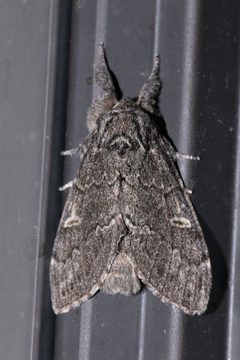
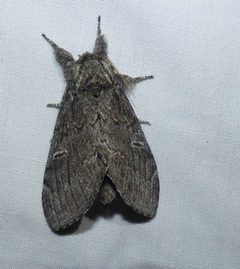
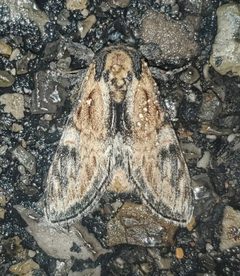
of Notodonta typically have triangular forewings with characteristic pattern elements; N. dromedarius displays rust-coloured wing markings, while N. ziczac shows a distinctive zigzag pattern. The can be distinguished from other Notodontidae genera by genitalic characters and wing pattern combinations. Larvae possess prominent humps on abdominal segments, particularly on the sixth, seventh, and twelfth segments, creating a characteristic silhouette when at rest.
Images
Habitat
Occurs in diverse environments including deciduous woodlands and urban areas where plants are present. Specific associations vary by based on host plant distribution.
Distribution
Palearctic distribution from North Africa across Europe to China. Present throughout Britain and Ireland, with records from Scandinavia (Denmark, Norway, Sweden) and North America (Vermont, USA).
Seasonality
periods vary by latitude and . In the UK, N. dromedarius flies in May/June and August in southern England (double-brooded), with a single in northern England and Scotland. N. ziczac shows similar pattern with first peaking in May in the UK, with timing advancing several weeks since the 1970s.
Diet
Larvae feed on willow (Salix spp.) and poplar (Populus spp.); N. ziczac primarily uses Salix with Populus as secondary .
Host Associations
- Salix - primary larval plantWillow
- Populus - secondary larval plantPoplar , less commonly used by N. ziczac
Life Cycle
Holometabolous development with , larva, pupa, and stages. Overwinters as pupa. number varies geographically: double-brooded in southern regions, single-brooded in northern regions. First timing has advanced several weeks since the 1970s observations for N. ziczac.
Behavior
are attracted to light traps. Larvae of N. ziczac assume a characteristic zigzag-like posture at rest due to body humps, giving the its name from German 'zickzack'.
Human Relevance
Subject of genomic research including complete -level assemblies for N. dromedarius (342 Mb) and N. ziczac (352 Mb) as part of the Darwin Tree of Life Project. N. dromedarius was among the first Notodontidae to have its chemically identified as (11Z,13Z)-11,13-hexadecadienal. abundance has declined sharply in the UK from 1970 to 2016 based on monitoring data.
Similar Taxa
- Other Notodontidae generaDistinguished by wing pattern combinations and genitalic ; Notodonta typically show more pronounced rust or zigzag forewing patterns compared to related .
More Details
Genomic resources
High-quality assemblies available for multiple : N. dromedarius assembly includes 31 chromosomal pseudomolecules (30 + Z ) with 99.35% scaffolded; N. ziczac assembly is 352 Mb with similar organization. Both assemblies include complete mitochondrial genomes (~18.3 kb).
Population trends
UK monitoring data show consistent downward trends in abundance for multiple Notodonta from 1970 to 2016, with N. dromedarius abundance greatly decreased at monitored sites over the past 50 years.
Phenological shifts
First for N. ziczac has advanced several weeks since 1970s observations, consistent with broader phenological responses to climate change in temperate Lepidoptera.