
Phryganidia californica
Packard, 1864
California Oak Moth, California Oakworm
Phryganidia californica, commonly known as the California oak moth or California , is a in the Notodontidae. It is the only member of its Dioptinae found north of Mexico. The is notable for periodic that can cause extensive defoliation of oak trees along the California coast. are active from March to November, with two per year in northern California and occasionally three in southern California.
Pronunciation
How to pronounce Phryganidia californica: //frɪˈɡænɪdiə ˌkælɪˈfɔːrnɪkə//
These audio files are automatically generated. While they are not always 100% accurate, they are a good starting point.
Identification
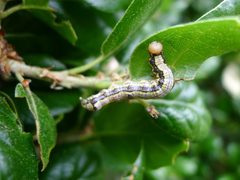
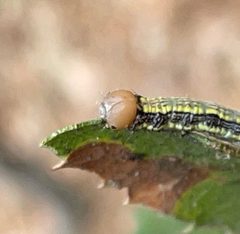
are distinguished by their tan to gray coloration with prominent wing and relatively small size. The only Dioptinae north of Mexico, which aids in narrowing identification geographically. Larvae are readily identified by their black bodies with lengthwise yellow stripes. Pupae are distinctive: white or yellow with black markings, lacking a cocoon, and suspended by silk threads. Similar brown in the region lack the combination of prominent wing venation and affiliation.
Images
Habitat
Coastal and near-coastal areas; found in oak woodlands and forests. During , extends inland to central valleys. Associated with deciduous oak stands, particularly coast live oak.
Distribution
Coastal regions of California, Oregon, and Washington in the United States. Range extends from the Oregon-Washington border south to the Mexican border. During booms, disperses inland from the coast into central California valleys.
Seasonality
on wing from March to November. Two per year in northern California; two to three generations in southern California. laid late in the season may overwinter on leaf undersides.
Diet
Larvae feed on leaves of deciduous oaks, especially Quercus agrifolia (coast live oak). Incidental include eucalyptus, chestnut, Tan Oak (Lithocarpus densiflorus), azalea, Giant Chinkapin (Castanopsis chrysophylla), and Canyon Live Oak. Young larvae skeletonize leaves by feeding between on the lower surface; older larvae chew completely through leaf blades, often leaving only major veins.
Host Associations
- Quercus agrifolia - primary coast live oak, preferred
- Lithocarpus densiflorus - incidental Tan Oak
- Castanopsis chrysophylla - incidental Giant Chinkapin, in Oregon
- Eucalyptus - incidental
- Castanea - incidental chestnut
- Rhododendron - incidental azalea
Life Cycle
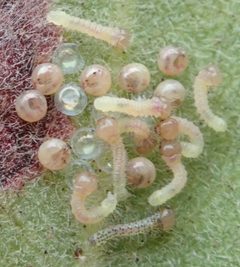
laid in loose clusters on foliage, limbs, or trunks; eggs on leaf undersides may overwinter. Larvae hatch and progress through five instars, skeletonizing leaves when young and consuming entire leaf blades when older. occurs in exposed pupae suspended by silken threads from trees, rocks, buildings, or other vertical surfaces. emerge and disperse; two to three per year depending on latitude.
Behavior
Larvae utilize silk threads to descend from trees to the ground or to reach other oak trees; if landing on another oak, feeding continues until . Both larvae and are , an unusual trait attributed to protective chemistry in their oak hosts that deters diurnal . Adults fly weakly but disperse effectively; rarely attracted to lights at night. During , larvae produce noticeable pellets that drop from the .
Ecological Role
Herbivore and defoliator of oak trees. can cause near-complete defoliation of individual trees or groups of trees, typically by late summer or fall. Despite visual severity, trees rarely die from defoliation. Larvae and pupae serve as for including tachinid flies (Actia flavipes, Hyphantrophaga virillis, Ceranthia sp.) and an ichneumon (Mesochorus sp.). Population crashes occur due to and the fungus bassiana.
Human Relevance
Considered a pest during years due to aesthetic damage and defoliation of ornamental and native oaks. Rarely causes tree mortality; trees typically recover. Subject of research on plant-insect chemical interactions and oak defensive chemistry.
Similar Taxa
- Other NotodontidaeCalifornia oak moth is distinguished by being the only Dioptinae in its range; other prominent moths lack this affiliation and the associated wing venation pattern.
- Other oak-feeding LepidopteraLarval coloration (black with yellow stripes) and feeding habit differ from most other oak caterpillars; pupal (exposed, boldly marked, suspended) is also distinctive.
Sources and further reading
- BugGuide
- Wikipedia
- GBIF taxonomy match
- iNaturalist taxon
- NCBI Taxonomy
- Catalogue of Life
- The Big 43: The California Native Plants, Plus One, Studied in UC Davis Research | Bug Squad
- Bohart Museum: Learn about California's State Insect on UC Davis Picnic Day | Bug Squad
- A Mural Like No Other | Bug Squad
- A Flash of Orange: Welcome, California Tortoiseshell! | Bug Squad
- California Dogface Butterfly: What the Fire Did | Bug Squad
- Bug Eric: Moth Monday: California Oak Moth