
Dicranurinae
Duponchel, 1845
Genus Guides
1Dicranurinae is a of prominent moths within the Notodontidae, order Lepidoptera. The subfamily was established by Duponchel in 1845. Members are characterized by distinctive larval , including modified structures and often prominent anal processes. The group is primarily distributed in the Palearctic and Oriental regions, with some representation in other biogeographic realms.
Pronunciation
How to pronounce Dicranurinae: //dɪˌkræn.jəˈriːniː//
These audio files are automatically generated. While they are not always 100% accurate, they are a good starting point.
Identification
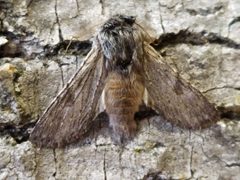
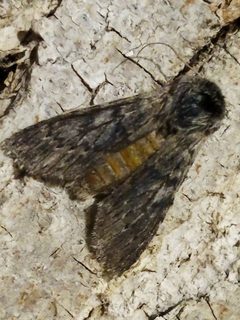
Larvae of Dicranurinae are distinguished from other Notodontidae by the presence of elongated, often branched or horn-like processes on the capsule, and frequently possess modified anal with prominent or projections. typically show reduced wing pattern complexity compared to Notodontinae, with more uniform forewing coloration and less pronounced transverse lines. The subfamily can be separated from Pygaerinae by differences in larval head and from Scranciinae by pupal structure.
Images
Habitat
occur in temperate and forest , with larvae typically associated with broadleaf and mixed woodland . Many species show strong fidelity to riparian zones and wetland edges where plants are abundant.
Distribution
Primary distribution centers in the Palearctic region, extending from western Europe through Siberia to the Russian Far East and Japan. Significant diversity occurs in the Oriental region, including the Himalayas, Southeast Asia, and parts of the Indian subcontinent. Some extend into the Nearctic region.
Seasonality
periods generally occur from late spring through mid-summer in temperate regions, with peak activity typically in June and July. Larval development spans late summer through autumn, with most in the pupal stage.
Life Cycle
Complete with four life stages: , larva, pupa, and . Larvae pass through five to six instars, with final instar larvae often displaying the most pronounced morphological modifications. occurs in soil or leaf litter, with adults emerging the following season.
Behavior
Larvae exhibit characteristic defensive postures when disturbed, arching the body and presenting modified processes toward potential . This is a defining trait of the .
Ecological Role
Larvae function as folivores on woody plants, contributing to nutrient cycling in forest . Their specialized suggests potential aposematic or mimicry relationships, though specific deterrence mechanisms remain incompletely documented.
Human Relevance
Some are occasional forest pests, with reported on economically important tree species including oaks (Quercus) and birches (Betula). Larvae are frequently encountered by naturalists due to their distinctive appearance.
Similar Taxa
- NotodontinaeLarger with larvae lacking the pronounced processes characteristic of Dicranurinae; typically show more complex wing patterning with distinct transverse lines.
- PygaerinaeLarvae possess different capsule architecture with reduced ; pupal structure differs, with Pygaerinae showing single-pointed versus or multi-pointed cremasters in Dicranurinae.
- ScranciinaePrimarily Neotropical distribution with larvae showing smooth capsules and different defensive ; lack the forewing venation patterns typical of Dicranurinae.
More Details
Taxonomic History
The has undergone repeated revision, with generic boundaries historically unstable. Molecular phylogenetic studies have clarified relationships within Notodontidae, confirming Dicranurinae as a distinct from Notodontinae sensu stricto.