
Furcula occidentalis
(Lintner, 1878)
Western Furcula Moth, Double-lined Furcula, Willow Kitten
Furcula occidentalis is a notodontid known by several including western furcula moth, double-lined furcula, and willow kitten. The exhibits a broad transcontinental distribution across North America, from the Yukon to the Atlantic coast. are active from spring through summer with one to two annually. The larvae feed primarily on willow (Salix) species and occasionally on poplar (Populus), giving rise to the 'willow kitten' common name.
Pronunciation
How to pronounce Furcula occidentalis: /fʊˈrkuː.la ɔk.sɪˈdɛn.tə.lɪs/
These audio files are automatically generated. While they are not always 100% accurate, they are a good starting point.
Identification
Distinguished from similar Furcula by the combination of two distinct dark transverse lines on the forewings and its broad North American distribution. The specific epithet 'occidentalis' historically distinguished it from eastern relatives, though the species now spans the continent. Larval identification relies on the characteristic forked caudal structure combined with association with Salix/Populus. may be separated from other notodontids by wing pattern and geographic occurrence.
Images
Appearance
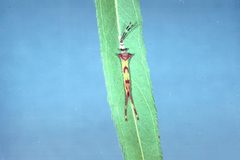
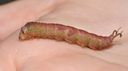
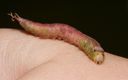
Wingspan 32–45 mm. have forewings with two distinct dark transverse lines, contributing to the 'double-lined' . The overall wing pattern and coloration are characteristic of the Furcula, with muted tones typical of notodontid moths. Larvae possess the distinctive forked or 'furcula' caudal structure that gives the genus its name, and exhibit the kitten-like appearance referenced in the common name 'willow kitten'.
Habitat
Associated with riparian and wetland supporting willow and poplar plants. Occupies diverse environments from forests to temperate deciduous woodlands, contingent on presence of larval food plants.
Distribution
Transcontinental North America: southern Yukon and British Columbia east to Nova Scotia; south to Maryland; west to Utah and Oregon. Presence confirmed in Canadian provinces including Alberta, Manitoba, and Saskatchewan, and US states including Vermont.
Seasonality
active April to August. One to two per year depending on latitude and local conditions. Larvae present June to September. Overwinters as pupa.
Diet
Larvae feed on Salix (willow) ; occasionally observed on Populus (poplar) species. Specific Salix species not documented in available sources.
Host Associations
- Salix - larval food plantprimary
- Populus - larval food plantoccasional
Life Cycle
Complete with one to two annually. laid on plants. Larvae feed June to September, developing through instars. occurs in soil or leaf litter; overwinters in pupal stage. emerge spring through summer.
Behavior
Larvae are foliage feeders on plants. Pupal allows in temperate climates. period spans spring and summer months.
Ecological Role
Herbivore in riparian and woodland ; contributes to nutrient cycling through leaf consumption. Serves as prey for . No documented specialized mutualisms.
Human Relevance
No significant economic impact documented. Not considered a pest . 'willow kitten' reflects cultural recognition of larval appearance. Occasional presence in urban and suburban areas with suitable plants.
Similar Taxa
- Furcula cinereaSimilar larval and use on Salix/Populus; distinguished by distribution and wing pattern
- Furcula borealisOverlapping range in eastern North America; distinguished by wing pattern details and
More Details
Nomenclatural history
Described by Lintner in 1878. The specific epithet 'occidentalis' reflects the ' original description from western North America, though subsequent recognition revealed a much broader transcontinental distribution.
Sources and further reading
- BugGuide
- Wikipedia
- GBIF taxonomy match
- iNaturalist taxon
- NCBI Taxonomy
- Catalogue of Life
- Lakin Grasshopper
- Bumble Bees: Feeling Impact of Climate Change | Bug Squad
- Probing the Molecular Interactions Between Western Flower Thrips and the Tomato Spotted Wilt Virus | Bug Squad
- Good News for the Western Bumble Bee, Bombus occidentalis
- A sting to kill a cow? Red velvet ant, a.k.a. cow killer, Dasymutilla occidentalis — Bug of the Week
- Bug Eric: True Bug Tuesday: Exporting the Western Conifer Seed Bug