
Furcula cinerea
(Walker, 1865)
Gray Furcula Moth
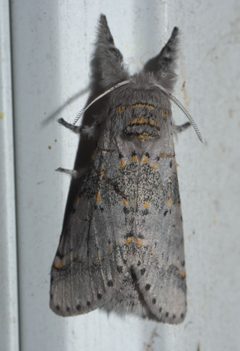
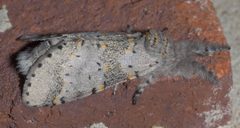
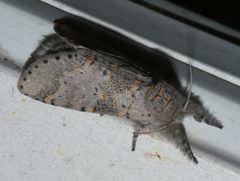
Furcula cinerea, the gray furcula , is a notodontid moth first described by Francis Walker in 1865. It is found across the United States, southern Canada, and the Northwest Territories. have a wingspan of 33–45 mm and are active from spring through late summer, with two per year in southern and one in northern populations. The species overwinters as pupae.
Pronunciation
How to pronounce Furcula cinerea: /ˈfʊrkʊla sɪˈneɪriə/
These audio files are automatically generated. While they are not always 100% accurate, they are a good starting point.
Identification
Distinguished from similar Furcula by geographic range and . The shaggy leg appearance is a notable field mark. Larval plant association with Betula, Populus, and Salix may aid identification of stages. are most reliably identified by genital dissection or molecular methods.
Images
Appearance
have a wingspan of 33–45 mm. The exhibits shaggy legs, a distinctive trait noted in field observations. Coloration is consistent with cryptic patterning typical of the .
Habitat
Associated with riparian and woodland where plants occur. Observed in cottonwood groves with nearby wetlands in prairie regions.
Distribution
United States, southern Canada, and the Northwest Territories. Specific records include Alberta, Manitoba, and Saskatchewan in Canada, and Vermont in the United States.
Seasonality
are on wing from April to September in the south and May to August in the north. Two per year occur in southern ; one generation in northern populations. Larvae are found from spring to fall in the south and July to August in the north.
Diet
Larvae feed on leaves of Betula (birch), Populus (poplar/cottonwood), and Salix (willow) . feeding habits are not documented.
Host Associations
- Betula - larval foliage
- Populus - larval foliage
- Salix - larval foliage
Life Cycle
Complete with , larva, pupa, and stages. The overwinters in the pupal stage. Two per year in southern range; one generation in northern range.
Behavior
are and attracted to light. Larvae are folivorous on plants. No documented defensive or social structure.
Ecological Role
Larval herbivore on deciduous trees and shrubs. Serves as prey for including spiders, assassin bugs, and other arthropods attracted to light stations.
Human Relevance
Occasionally observed during surveys and at light stations. No documented economic importance as a pest. Subject of citizen science observations during National Moth Week events.
Similar Taxa
- Furcula borealisSimilar members with overlapping range; requires genital examination for definitive separation
- Furcula occidentalisWestern with potential range overlap; and plant associations may differ
More Details
Taxonomic Note
Originally described as Cerura cinerea by Walker in 1865; later transferred to Furcula.
Generation Time
and temperature drive the observed latitudinal gradient in voltinism, with facultative multivoltinism in favorable southern conditions.