
Furcula borealis
(Guérin-Méneville, 1844)
White Furcula Moth
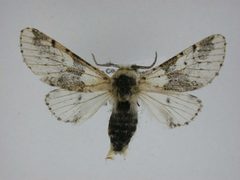
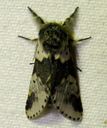
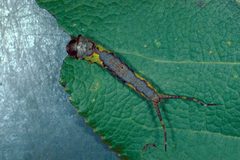
Furcula borealis, commonly known as the white furcula , is a North American notodontid moth with a wingspan of 31–42 mm. are active from April to August across a broad range extending from New Hampshire to Florida and westward to Texas, Colorado, and South Dakota. The larvae feed on woody plants including cherry, willow, and poplar .
Pronunciation
How to pronounce Furcula borealis: //ˈfʊrk.jʊ.lə bɔːˈriː.ə.lɪs//
These audio files are automatically generated. While they are not always 100% accurate, they are a good starting point.
Identification
Wingspan 31–42 mm. can be distinguished from similar Furcula by specific wing pattern characteristics typical of the , though precise diagnostic features for F. borealis specifically are not detailed in available sources. The genus Furcula is characterized by with tailed hindwings and distinctive notodontid .
Images
Distribution
Eastern and central North America: from New Hampshire south to Florida, west to Texas, with disjunct in Colorado and South Dakota.
Seasonality
on wing from April to August.
Diet
Larvae feed on Prunus avium (sweet cherry), Salix (willow) , and Populus (poplar) species.
Host Associations
- Prunus avium - larval food plant
- Salix - larval food plant-level ; specific not documented
- Populus - larval food plant-level ; specific not documented
Similar Taxa
- Furcula cinereaSimilar range and ; both eastern North American Furcula with overlapping plant preferences
- Furcula occidentalisWestern North American ; distinguished by geographic separation though some range overlap may occur in Colorado
Sources and further reading
- BugGuide
- Wikipedia
- GBIF taxonomy match
- iNaturalist taxon
- NCBI Taxonomy
- Catalogue of Life
- Grasshoppers of Wyoming and the West
- Bruner Spurthroated Grasshopper
- Bugs for All, All for Bugs | Bug Squad
- Grasshoppers of Colorado
- Zombie bees, Apis mellifera, and their tormentor the humpbacked fly, Apocephalus borealis — Bug of the Week
- Did One Praying Mantis Give Rise to an All-Female Species?