
Nola cereella
(Bosc, 1800)
sorghum webworm, sorghum webworm moth
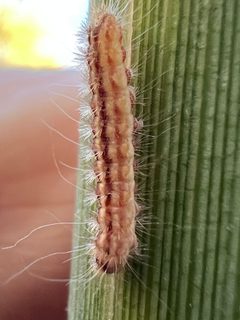
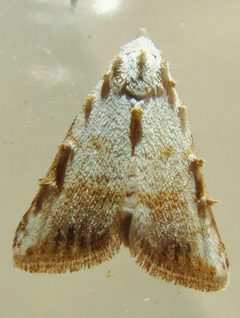
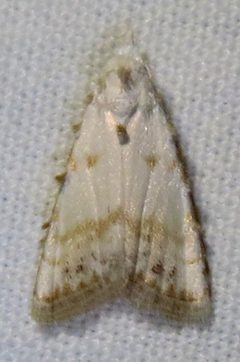
Nola cereella, commonly known as the sorghum webworm, is a small in the Nolidae. The was first described by Louis Augustin Guillaume Bosc in 1800. have a wingspan of 12–18 mm and are active from July to September. The larvae feed specifically on Sorghum vulgare, making this species an agricultural pest of sorghum crops.
Pronunciation
How to pronounce Nola cereella: //ˈnoʊlə sɛˈriːɛlə//
These audio files are automatically generated. While they are not always 100% accurate, they are a good starting point.
Identification
are small with wingspan 12–18 mm, distinguished by the presence of tufted . The is known from the southeastern United States and southward through the Neotropics. Larvae feed on sorghum and can be distinguished from other -feeding caterpillars by their association and .
Images
Distribution
Southeastern United States, from Texas to Florida and north to New York. Range extends southward through Puerto Rico and Suriname to Argentina.
Seasonality
are on wing from July to September, with timing varying by location.
Diet
Larvae feed on Sorghum vulgare (sorghum).
Host Associations
- Sorghum vulgare - larval food plantLarvae feed on developing flower parts and kernels.
Human Relevance
Agricultural pest of sorghum. Larvae damage developing grain by feeding on flower parts and kernels.
Similar Taxa
- Nola sorghiellaAlso called sorghum webworm; occurs in humid eastern Texas, has similar and use on sorghum. N. cereella is distinguished by its broader geographic range and earlier description date.
Sources and further reading
- BugGuide
- Wikipedia
- GBIF taxonomy match
- iNaturalist taxon
- NCBI Taxonomy
- Catalogue of Life
- Melittologist Laurence Packer: 'Extreme Bees in Extreme Environments' | Bug Squad
- People - AgriLife Extension Entomology
- Remembering Vernon Burton: 1924-2015 | Bug Squad
- Insects that feed on developing grain in the head - AgriLife Extension Entomology
- Frank Zalom: A Distinguished Public Service Scholar | Bug Squad
- U.S. Policy Leaves Country Vulnerable to Arthropod-Borne Diseases