
Narthecophora pulverea
Smith, 1900
Powdered Owlet
Narthecophora pulverea is a noctuid and the sole in the Narthecophora. First described by John Bernhardt Smith in 1900, it is known only from Arizona. The "Powdered Owlet" refers to its appearance. As a member of the Stiriinae, it belongs to a group of small to medium-sized owlet moths with distinctive morphological traits.
Pronunciation
How to pronounce Narthecophora pulverea: //nɑːrˌθɛkoʊˈfɔːrə pʌlˈvɛriə//
These audio files are automatically generated. While they are not always 100% accurate, they are a good starting point.
Identification
Distinguished from other Arizona noctuids by its placement in the Narthecophora. The combination of stiriine characteristics with the specific "powdered" appearance referenced in its name may aid identification. Similar small noctuids in Arizona include members of genera such as Tripudia and Cisthene, but Narthecophora is distinguished by unique genitalic and wing venation characters established in the original description.
Images
Appearance
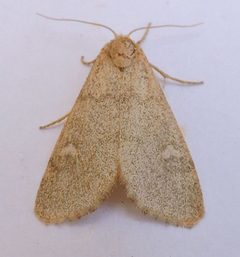
The epithet "pulverea" (Latin for "powdery") suggests a dusted or powdery wing appearance. As a stiriine noctuid, it likely has relatively broad, rounded forewings and a compact body typical of this . Detailed descriptions of coloration and pattern are not readily available in accessible literature.
Habitat
Specific associations are not documented. Based on the arid distribution in Arizona, it likely occurs in desert or semi-arid environments.
Distribution
Known only from the US state of Arizona. The precise type locality and extent of range within Arizona are not specified in available sources.
Similar Taxa
- Tripudia spp.Small Arizona noctuids in the same general size range; distinguished by different wing patterns and genitalic
- Cisthene spp.Small, often powdery-appearing lichen moths (Erebidae: Arctiinae) with which this might be confused; distinguished by -level characters and wing venation
More Details
Taxonomic history
Smith's 1900 description established both the and simultaneously, making Narthecophora a genus from its inception. The genus has remained monotypic for over 120 years.
Research status
The appears to be rarely collected and poorly represented in museum collections relative to more common Arizona noctuids. The 96 iNaturalist observations suggest it may be more frequently encountered than museum records indicate, though identification challenges may affect reporting .