
Syngrapha rectangula
(Kirby, 1837)
Salt-and-pepper Looper Moth, Salt and Pepper Looper, Angulated Cutworm
Syngrapha rectangula is a noctuid found across northern North America, from eastern Canada through the Great Lakes region and westward to the Pacific Northwest. are active during summer months, with larvae feeding on coniferous trees including balsam fir, western hemlock, white spruce, and Douglas-fir. The species exhibits two recognized with distinct geographic distributions.
Pronunciation
How to pronounce Syngrapha rectangula: /sɪnˈɡræfə rɛkˈtæŋɡjʊlə/
These audio files are automatically generated. While they are not always 100% accurate, they are a good starting point.
Identification
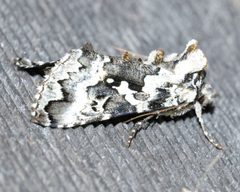
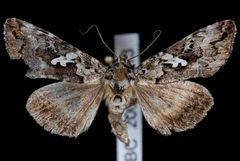
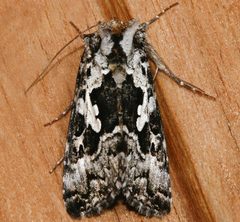
The can be distinguished from similar loopers in the Syngrapha by the angulated or somewhat rectangular outline of the forewings, combined with the distinctive salt-and-pepper mottled pattern. The specific epithet 'rectangula' refers to this wing shape characteristic. identification requires examination of more subtle wing pattern differences and geographic origin.
Images
Appearance
have a wingspan of 32–35 mm. The forewings display a characteristic pattern of dark and light markings that give the its , with a somewhat rectangular or angulated aspect to the wing shape. The overall coloration is mottled gray-brown with contrasting pale and dark areas.
Habitat
Occurs in coniferous and mixed coniferous-deciduous forests, particularly in areas where tree are abundant. Found from lowland forests to montane elevations, including the Cascade Range. suitability is strongly tied to presence of larval host trees.
Distribution
North America: Newfoundland and Quebec west to Manitoba and Saskatchewan; south to New Jersey, northern Pennsylvania, North Carolina, and Virginia; west to British Columbia, Alberta, Montana, northern Idaho, Washington, and Oregon (Cascades). The nominate S. r. rectangula occurs in the eastern and central portions of the range, while S. r. nargenta is found in the western mountains.
Seasonality
fly from July to August, with exact timing varying by latitude and elevation. Single brooded in most of range, though local may vary with climate conditions.
Diet
Larvae feed on Abies balsamea (balsam fir), Tsuga heterophylla (western hemlock), Picea glauca (white spruce), and Pseudotsuga menziesii (Douglas-fir). feeding habits not documented.
Host Associations
- Abies balsamea - larval food plantbalsam fir
- Tsuga heterophylla - larval food plantwestern hemlock
- Picea glauca - larval food plantwhite spruce
- Pseudotsuga menziesii - larval food plantDouglas-fir
Life Cycle
Behavior
are and attracted to light. Larvae are foliage feeders on coniferous . Specific behavioral observations beyond period and host association are limited in published sources.
Ecological Role
Larval stage functions as a primary consumer in coniferous forest , feeding on economically important timber . levels are generally not reported as status, suggesting role as a background herbivore rather than major disturbance agent.
Human Relevance
Minor significance as a forest pest; larvae feed on commercially valuable conifer including Douglas-fir and spruce, but not known to reach economically damaging levels. The species is of interest to lepidopterists and biodiversity monitoring programs.
Similar Taxa
- Syngrapha celsaSimilar wing pattern and ; distinguished by forewing shape and more northern distribution
- Syngrapha aliasOverlapping range and similar size; S. rectangula distinguished by more pronounced angulation of forewing margin
- Other Plusiinae loopersGeneral resemblance in body form and looping larval locomotion; identification requires examination of wing pattern details and genitalia
More Details
Subspecies
Two recognized: Syngrapha rectangula rectangula (eastern and central) and Syngrapha rectangula nargenta (western mountains). The western subspecies was described based on minor wing pattern differences.
Sources and further reading
- BugGuide
- Wikipedia
- GBIF taxonomy match
- iNaturalist taxon
- NCBI Taxonomy
- Catalogue of Life
- Glossary
- Soybean Insects: Early-to-Late Season Pests (Emergence to R7) - AgriLife Extension Entomology
- Terrible Night for a Visiting Scholar at UC Davis | Bug Squad
- 425-million-year-old Arthropod Found in England
- Bug Eric: Window-winged Moths
- Destination Guatuso, Costa Rica: Stingless bees, Mariolas, in the rainforest (Tribe, Meliponini) — Bug of the Week