
Syngrapha celsa
(Edwards, 1881)
plain silver Y, western conifer looper
Syngrapha celsa is a noctuid known as the plain silver Y or western conifer looper. The was described by Henry Edwards in 1881 and occurs in western North America. Larvae are specialized feeders on coniferous trees in the Pinaceae and Cupressaceae.
Pronunciation
How to pronounce Syngrapha celsa: //sɪnˈɡræfə ˈsɛlsə//
These audio files are automatically generated. While they are not always 100% accurate, they are a good starting point.
Identification
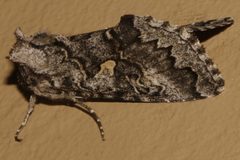
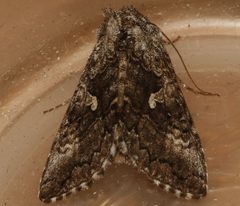
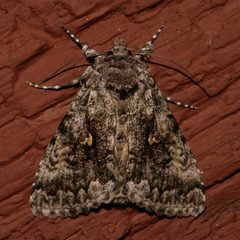
The silver Y marking on the forewing distinguishes this from non-Plusiinae noctuids. The plain, unpatterned ground color separates it from more boldly marked Syngrapha species such as S. rectangula. Genitalia examination may be required for definitive identification from closely related species.
Images
Appearance
Wingspan 34–38 mm. Forewings display a characteristic silver Y-shaped mark, typical of the Syngrapha. Overall coloration relatively plain compared to related , with muted gray-brown tones.
Habitat
Coniferous forests of western North America, associated with montane and subalpine zones where trees occur.
Distribution
British Columbia southward through Washington and Oregon to California, eastward to Idaho, Nevada, Arizona, and New Mexico.
Seasonality
fly from July to September; exact timing varies by latitude and elevation.
Diet
Larvae feed on Abies lasiocarpa (subalpine fir), Abies grandis (grand fir), Abies concolor (white fir), Picea engelmannii (Engelmann spruce), Picea glauca (white spruce), Pinus monticola (western white pine), and Tsuga heterophylla (western hemlock).
Host Associations
- Abies lasiocarpa - larval
- Abies grandis - larval
- Abies concolor - larval
- Picea engelmannii - larval
- Picea glauca - larval
- Pinus monticola - larval
- Tsuga heterophylla - larval
Ecological Role
Larval feeding on conifer foliage contributes to nutrient cycling in montane forest . may cause localized defoliation of trees.
Human Relevance
Occasional forest pest during years; larvae may defoliate economically important conifer including true firs and spruces.
Similar Taxa
- Syngrapha rectangulaMore contrasting wing pattern with distinct dark markings; S. celsa has plainer overall appearance
More Details
Subspecies
Two recognized: Syngrapha celsa celsa and Syngrapha celsa sierra