
Megalographa biloba
(Stephens, 1830)
Bilobed Looper Moth, Stephens' Gem
A noctuid in the Plusiinae with a wingspan of 38–44 mm. It occurs from the southern United States through Central and South America to Argentina, and migrates seasonally into northern United States and southern Canada where it produces one or two summer but rarely survives winter. The is sometimes considered a pest on cultivated lettuce.

Pronunciation
How to pronounce Megalographa biloba: //ˌmɛɡəloʊˈɡræfə baɪˈloʊbə//
These audio files are automatically generated. While they are not always 100% accurate, they are a good starting point.
Identification
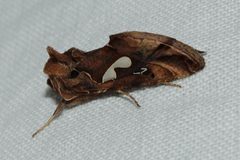
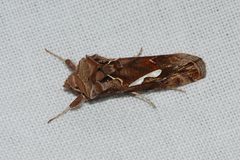
Distinguished from other Plusiinae by the bilobed pattern on the forewings. The thoracic hair tuft visible in settled specimens is characteristic of the . Distinguished from the similar Autographa and other loopers by the specific bilobate wing marking pattern and geographic distribution.
Images
Habitat
Occurs in diverse across its broad range from temperate to tropical zones. Seasonal migrants extend into northern agricultural regions during summer months.
Distribution
Native and resident from southern United States through Central America and South America to Argentina. Seasonal migrant to northern United States and southern Canada (Alberta, Manitoba, Saskatchewan), where occurrence is irregular and non-.
Seasonality
Seasonal migrant in northern parts of range, occurring during summer months with one or two . have been observed in early January in California (55°F, overcast conditions). Does not survive winter in northern United States and Canada.
Diet
Larval plants include cultivated lettuce (Lactuca sativa) and likely other plants; specific wild host range not well documented.
Host Associations
- Lactuca sativa - larval cultivated lettuce; sometimes considered a pest
Life Cycle
Complete with , larva (caterpillar/looper), pupa, and stages. In northern migratory range, produces one or two per summer; success rare or absent in these areas. details in tropical core range not well documented.
Behavior
activity pattern typical of Noctuidae. attracted to light. Seasonal northward documented, with individuals flying significant distances to establish temporary summer .
Ecological Role
Larval stage functions as herbivore; occasional pest status in agricultural systems. stage likely serves as and prey for including bats and birds.
Human Relevance
Minor agricultural pest on cultivated lettuce. Subject of entomological research on and seasonal range expansion. Referenced in biodiversity monitoring (Art Shapiro's transect studies) as a distinctive Plusiinae .
Similar Taxa
- Trimerotropis pallidipennisBoth have bilobate pronotal carina, but T. pallidipennis is a (Orthoptera) with entirely different and ; confusion unlikely but term 'bilobate' appears in both descriptions
- Autographa speciesSimilar Plusiinae loopers with overlapping range; distinguished by specific wing pattern details and bilobate marking characteristic of M. biloba
- Other Plusiinae (e.g., Chrysodeixis, Trichoplusia)Similar looper and ; require examination of wing pattern details for accurate identification
More Details
Taxonomic History
Originally described as Plusia biloba by Stephens in 1830; later transferred to Megalographa. The genus Megalographa was reviewed by Lafontaine and Poole with description of additional from Rica.
Migration Biology
Documented as a seasonal migrant that expands its range northward during favorable summer conditions, similar to other noctuid agricultural pests. This migratory explains its irregular occurrence in Canadian provinces and northern US states.