
Autographa metallica
(Grote, 1875)
Shaded Gold Spot
Autographa metallica, commonly known as the shaded gold spot, is a in the Noctuidae. The was first described by Augustus Radcliffe Grote in 1875. It occurs in western North America with a range extending from southern Alaska and coastal British Columbia south to central California, and eastward through the Rocky Mountains to central Colorado. are active during mid-summer, with a wingspan of 38–40 mm.
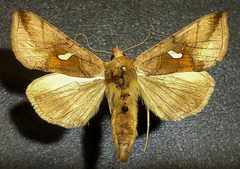
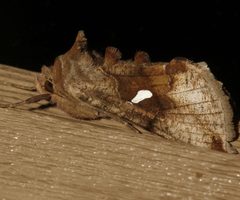
Pronunciation
How to pronounce Autographa metallica: //ɔːˈtɒɡrəfə məˈtælɪkə//
These audio files are automatically generated. While they are not always 100% accurate, they are a good starting point.
Images
Distribution
Western North America from the southern Alaska coast and Charlotte and Vancouver Islands south to central California, east to the Alberta-British Columbia border, and south in the Rocky Mountains to central Colorado.
Seasonality
are on wing from July to August, with exact timing depending on location.
Diet
Larvae feed on various herbs; specific plants are not well documented.
More Details
Taxonomic History
Originally described as Plusia metallica by Grote in 1875, later transferred to the Autographa.
Sources and further reading
- BugGuide
- Wikipedia
- GBIF taxonomy match
- iNaturalist taxon
- NCBI Taxonomy
- Catalogue of Life
- Bug Eric: Metallica
- Coleoptera | Beetles In The Bush | Page 10
- Insect Migration (Part 1) - Buglife Blog - Buglife
- Denmark Museum Highlights UW Entomologist’s Naming of Shakira Wasp
- Mudo Pryfed (Rhan 1) - Buglife Blog - Buglife
- Bug Eric: Wasp Wednesday: Not Wasp VIII