
Eosphoropteryx thyatyroides
(Guenée, 1852)
Pink-patched Looper Moth, Pink-tinted Beauty
A medium-sized noctuid with distinctive pinkish wing patches, found in deciduous and mixed forests across North America. are active during summer months, with some showing bimodal periods. Larvae specialize on meadow-rue (Thalictrum). The species exhibits notable geographic variation in flight timing between northern and montane populations.

Pronunciation
How to pronounce Eosphoropteryx thyatyroides: //iˌɒsfərəˈptɛrɪks θaɪəˈtɪərɔɪdiːz//
These audio files are automatically generated. While they are not always 100% accurate, they are a good starting point.
Identification
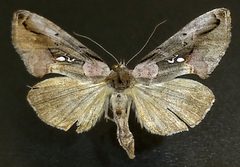
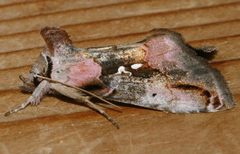
Medium-sized noctuid with wingspan 31–38 mm. Forewing ground color variable, ranging from warm brown to gray-brown. Diagnostic pinkish-rose patch on forewing, often diffuse and blending with ground color. Hindwing pale gray with darker marginal band. . Body moderately stout, with slight tufting. Similar to other Plusiinae loopers but distinguished by the distinctive pink-rose forewing patch and relatively small size.
Images
Habitat
Deciduous and mixed forests, particularly in riparian zones and moist woodland edges where larval plants occur. Associated with Thalictrum : shaded stream banks, moist meadows, and forest openings. Elevational range extends from lowlands to montane zones in western .
Distribution
Eastern North America: Nova Scotia and northern Ontario south to Minnesota, Michigan, Ohio; Appalachian distribution from Maine to eastern Tennessee and western North Carolina. Western North America: central Alberta and southern British Columbia south through Cascades to southern Oregon, and Rocky Mountains to northern Idaho.
Seasonality
active July–August in Alberta; June to early August in Great Smoky Mountains, with partial second mid-October at higher elevations. Flight period varies geographically, with western montane showing shorter, more concentrated .
Diet
Larvae feed on Thalictrum dioicum and Thalictrum polygamum (meadow-rues, Ranunculaceae). feeding habits not documented.
Host Associations
- Thalictrum dioicum - larval plant
- Thalictrum polygamum - larval plant
Life Cycle
Complete : , larva, pupa, . Larval stage specialized on Thalictrum foliage. site not documented. stage presumed pupal, based on Plusiinae , but not confirmed for this .
Behavior
, attracted to light. Larvae are typical loopers with reduced , moving with characteristic looping gait.
Ecological Role
Herbivore in forest understory and riparian . herbivore on Thalictrum, potentially contributing to of this plant . Serves as prey for including birds, bats, and predatory arthropods.
Human Relevance
Minor significance. Occasionally encountered by naturalists and enthusiasts. Not an agricultural pest. Scientific interest due to narrow larval specialization and biogeographic pattern spanning eastern and western North America.
Similar Taxa
- Autographa speciesSimilar size and general Plusiinae appearance; distinguished by absence of pink forewing patch and different wing pattern elements
- Syngrapha speciesOverlapping distribution and ; distinguished by more contrasting forewing patterns, often with silver or white markings rather than pink