
Chrysanympha
Grote, 1896
Species Guides
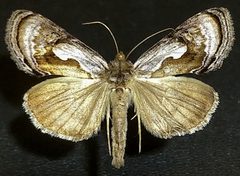
1- Chrysanympha formosa(Formosa looper)
Chrysanympha is a of in the Noctuidae, Plusiinae. The genus was established by Grote in 1896 and contains at least one described , Chrysanympha formosa. It belongs to the tribe Plusiini, a group commonly known as looper moths or owlet moths with distinctive wing patterns.
Pronunciation
How to pronounce Chrysanympha: //ˌkrɪsəˈnɪmfə//
These audio files are automatically generated. While they are not always 100% accurate, they are a good starting point.
Identification
As a within Plusiinae, Chrysanympha likely exhibit the characteristic forewing pattern elements typical of the , including a spot and often a distinct spot. However, specific diagnostic features separating Chrysanympha from related genera such as Autographa or Plusia are not clearly documented in available sources.
Images
Distribution
Records indicate presence in the northeastern United States, specifically Vermont. Distribution data are sparse beyond this region.
Similar Taxa
- AutographaBoth belong to Plusiinae and share general wing pattern characteristics; -level distinction requires examination of genitalia or specific forewing markings.
- PlusiaAnother Plusiinae with similar overall ; Chrysanympha may be distinguished by subtle differences in wing pattern and body proportions, though specific criteria are poorly documented.
More Details
Taxonomic history
Chrysanympha was described by Augustus Radcliffe Grote in 1896. The type , Chrysanympha formosa, was originally described under a different (Plusia) in 1865 before being transferred to Chrysanympha.
Data limitations
The is poorly represented in biological collections and literature. Most available information is taxonomic rather than ecological, reflecting the scarcity of field observations and studies.