
Autoplusia
McDunnough, 1944
Species Guides
3- Autoplusia egena(Bean Looper)
- Autoplusia egenoides(Lesser Bean Looper)
- Autoplusia olivacea(Olive Bean Looper)
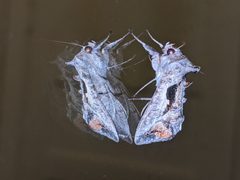
Autoplusia is a of owlet moths in the Noctuidae, Plusiinae. The genus was established by James Halliday McDunnough in 1944. It contains seven described distributed across the Americas. Members of this genus belong to the tribe Plusiini, which includes many species commonly known as looper moths due to their characteristic larval locomotion.

Pronunciation
How to pronounce Autoplusia: /ˌɔːtəˈpluːzɪə/
These audio files are automatically generated. While they are not always 100% accurate, they are a good starting point.
Identification
in Autoplusia can be distinguished from related in Plusiini by genitalia characteristics and wing pattern details. The genus is morphologically similar to other Plusiini genera such as Trichoplusia and Ctenoplusia, requiring examination of male genitalia structures and forewing pattern elements for definitive identification. The type species, Autoplusia egena, serves as the reference for genus-level characteristics.
Images
Distribution
The occurs in the Americas. records include: Autoplusia egena (southern United States through Central and South America), Autoplusia egenoides (southern United States), Autoplusia abrota (Central America), Autoplusia gammoides (South America), Autoplusia masoni (Central America), Autoplusia olivacea (southern United States), and Autoplusia phocina (South America).
Similar Taxa
- TrichoplusiaBoth are Plusiini with similar forewing patterns and body shape; distinguished by male genitalia and specific wing pattern elements
- CtenoplusiaClosely related Plusiini sharing general ; separation requires examination of genitalia and forewing pattern details
- ChrysodeixisAnother Plusiini with superficially similar appearance; differs in wing pattern and genitalia structure
More Details
Species list
The contains seven described : Autoplusia abrota Druce, 1889; Autoplusia egena (Guenée, 1852); Autoplusia egenoides Franclemont & Todd, 1983; Autoplusia gammoides (Blanchard, 1852); Autoplusia masoni Schaus, 1894; Autoplusia olivacea Skinner, 1917; and Autoplusia phocina Hampson, 1913. Several species were transferred to this genus from other genera upon its establishment.
Taxonomic history
Autoplusia was erected by McDunnough in 1944 to accommodate previously placed in other Plusiini , particularly those related to what is now recognized as the egena species group. The genus has been maintained in modern classifications based on consistent morphological and genitalia characteristics.