
Ctenoplusia
Dufay, 1970
Species Guides
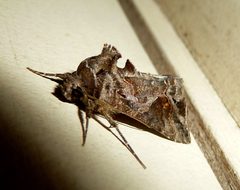
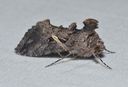
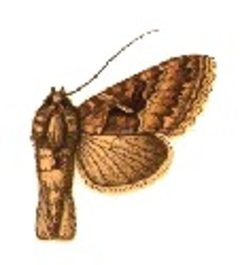
1- Ctenoplusia oxygramma(Sharp-stigma Looper Moth)
Ctenoplusia is a of in the Plusiinae ( Noctuidae), established by Dufay in 1970. The genus comprises approximately 90 described distributed across multiple continents. One species, Ctenoplusia agnata, has been extensively studied due to its status as a significant agricultural pest in East Asia. Species in this genus are characterized by their habits and association with diverse ranging from agricultural landscapes to natural vegetation.
Pronunciation
How to pronounce Ctenoplusia: //ˌtɛnəˈpluːziə//
These audio files are automatically generated. While they are not always 100% accurate, they are a good starting point.
Images
Habitat
vary by ; Ctenoplusia agnata occurs in agricultural landscapes, particularly soybean fields and areas with bean crops and cruciferous vegetables. The includes species adapted to temperate regions where cold enables , as well as species in tropical and subtropical zones.
Distribution
Widespread across multiple continents including Asia, Africa, Europe, and North America. Ctenoplusia agnata is distributed across East Asian countries including Korea, China, and Japan, with capacity for long-distance enabling rapid geographic spread. Distribution records from GBIF indicate presence in Denmark, Sweden, and Vermont (USA).
Diet
Varies by ; Ctenoplusia agnata is , feeding on bean crops, cruciferous vegetables, soybeans, tobacco, and cotton. plants include Glycine max (soybean), Phaseolus spp. (beans), Brassicaceae, Nicotiana tabacum (tobacco), and Gossypium spp. (cotton). Diet of other Ctenoplusia species is not well documented in available sources.
Host Associations
- Glycine max - larval soybean; primary for C. agnata
- Phaseolus spp. - larval bean crops
- Brassicaceae - larval cruciferous vegetables
- Nicotiana tabacum - larval tobacco
- Gossypium spp. - larval cotton
Life Cycle
Developmental stages include , larva (with multiple instars including 3rd and 5th instars documented), pupa, and . Specific details vary by and are incompletely documented for most Ctenoplusia species beyond C. agnata.
Behavior
Ctenoplusia agnata exhibits long-distance seasonal covering hundreds of kilometers, enabling rapid geographic spread and of new agricultural areas. The possesses significant cold with physiological adaptations for in temperate regions. of other Ctenoplusia species is not well documented.
Ecological Role
Ctenoplusia agnata functions as a significant agricultural pest causing substantial crop losses in East Asia, particularly affecting economically important crops. Ecological roles of other in the are not well documented.
Human Relevance
Ctenoplusia agnata is a major agricultural pest causing significant damage to bean crops, cruciferous vegetables, soybeans, tobacco, and cotton across East Asian countries. The has been subject to genomic research to inform pest management strategies, including -level assembly for potential application in Plusiinae pest management. Other Ctenoplusia species have minimal documented human relevance.
Similar Taxa
- Chrysodeixis includensBoth in Plusiinae; share number and synteny with C. agnata, though C. agnata is phylogenetically closer to Trichoplusia ni
- Trichoplusia niBoth in Plusiinae; C. agnata has closer phylogenetic relationship to T. ni than to Chrysodeixis includens despite shared number with the latter
More Details
Genomic Research
A -level assembly of Ctenoplusia agnata has been published (406.7 Mb, 31 chromosomes, 12,726 protein-coding genes) using PacBio Revio long-read and Pore-C scaffolding. Comparative analysis revealed C. agnata contains fewer or similar detoxification genes (CYP, CCE, GST, UGT, ABC ) compared to related Plusiinae Chrysodeixis includens and Trichoplusia ni.
Species Diversity
The contains approximately 90 described , with many species described by Dufay in the 1970s and additional species described by Behounek & Ronkay in 1999.