
Ctenoplusia oxygramma
(Geyer, 1832)
Sharp-stigma Looper Moth, Sharp Stigma Looper
Ctenoplusia oxygramma is a noctuid commonly known as the Sharp-stigma Looper. It is a medium-sized moth with a wingspan of approximately 35 mm. The has an exceptionally broad distribution spanning North America, the Caribbean, and South America, with additional records from India. It is a herbivore known to feed on several plant species including tobacco and various asters.
Pronunciation
How to pronounce Ctenoplusia oxygramma: //ˌktɛnoʊˈpluːziə ˌɒksɪˈɡræmə//
These audio files are automatically generated. While they are not always 100% accurate, they are a good starting point.
Identification
The 'sharp stigma' referenced in the refers to a pointed or acute marking on the forewing that distinguishes it from related loopers with more rounded stigma patterns. The can be separated from other Ctenoplusia species by this acute wing marking combined with its specific geographic range and plant associations. Genitalia examination may be required for definitive identification from similar Plusiinae species.
Images
Appearance
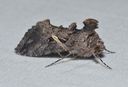
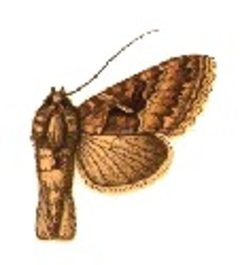
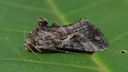
Medium-sized with wingspan approximately 35 mm. Forewings typically show characteristic loopers moth patterning with a distinct sharp or pointed stigma marking. Coloration generally in muted brown and gray tones typical of noctuid moths.
Habitat
Occurs in diverse environments across its broad range, including open fields, meadows, agricultural areas, and disturbed where plants grow. Found from southern Ontario through eastern and central United States, extending south through Mexico to South America.
Distribution
North America: southern Ontario, eastern United States west to Arizona, north to Wisconsin, Iowa, Nebraska, Kansas. Also recorded from California. Caribbean: Antilles. Central and South America: Mexico south to Brazil and northern Argentina. Additional record from India (possibly introduced or misidentified).
Seasonality
activity period varies by latitude; in temperate North America, adults are recorded from spring through fall with peak activity in summer months. Multiple likely in southern portions of range.
Diet
Larval plants recorded: Aster spp., Erigeron canadensis (horseweed), Nicotiana tabacum (cultivated tobacco), and Solidago spp. (goldenrods). on Asteraceae and Solanaceae.
Host Associations
- Aster - larval
- Erigeron canadensis - larval
- Nicotiana tabacum - larval cultivated tobacco
- Solidago - larval
Behavior
Ecological Role
Herbivore in terrestrial ; contributes to nutrient cycling through consumption of herbaceous vegetation. Larval feeding on weedy such as Erigeron canadensis may provide minor ecosystem service in agricultural contexts.
Human Relevance
Minor pest potential on cultivated tobacco (Nicotiana tabacum). Otherwise not of significant economic importance. Subject of citizen science documentation with substantial observation records on iNaturalist.
Similar Taxa
- Ctenoplusia spp.Other in share general looper and wing patterns; distinguished by shape of stigma marking and geographic distribution
- Autographa spp.Formerly classified in this ; similar overall appearance but separated by genitalic and wing pattern characters
- Other Plusiinae loopersShare reduced locomotion and general body plan; require examination of wing pattern details and genitalia for separation
More Details
Taxonomic History
Originally described as Autographa oxygramma by Geyer in 1832, later transferred to Ctenoplusia. The basionym Autographa oxygramma is still encountered in older literature.
Distribution Anomaly
The single record from India is geographically disjunct from the primarily New World distribution and may represent an introduced , a misidentification, or a labeling error; this requires verification.