
Colocasia flavicornis
Smith, 1884
yellowhorn, Saddled Yellowhorn
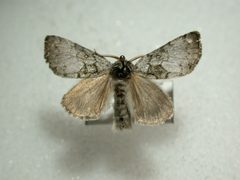
Colocasia flavicornis, commonly known as the yellowhorn or Saddled Yellowhorn, is a noctuid described by Smith in 1884. It occurs in eastern North America, with active from early spring through late summer. The species produces two annually and its larvae feed on the foliage of several deciduous tree .
Pronunciation
How to pronounce Colocasia flavicornis: /kɔloʊˈkeɪʒə flæˈvɪkɔrnɪs/
These audio files are automatically generated. While they are not always 100% accurate, they are a good starting point.
Images
Distribution
Found in North America east of the Rocky Mountains. Canadian records include Ontario, Quebec, New Brunswick, Nova Scotia, Saskatchewan, Manitoba, and Alberta. United States records include Vermont.
Seasonality
are on wing from March to September. The has two per year.
Diet
Larvae feed on leaves of deciduous trees including beech (Fagus), oak (Quercus), maple (Acer), and elm (Ulmus).
Host Associations
- Fagus - larval food plantbeech
- Quercus - larval food plantoak
- Acer - larval food plantmaple
- Ulmus - larval food plantelm
Life Cycle
; two per year.
More Details
Observation data
iNaturalist records 1,822 observations of this .