
Charadra deridens
Guenée, 1852
Laugher Moth, Marbled Tuffet Moth, Laugher
Charadra deridens is a medium-sized noctuid commonly known as the Laugher Moth or Marbled Tuffet Moth. It is widespread across northern North America, ranging from eastern Canada to the Pacific coast, with notable absence from the southwestern United States. The exhibits seasonal variation in period, with shorter activity windows in northern and extended seasons in southern regions such as Florida.
Pronunciation
How to pronounce Charadra deridens: //kəˈrædrə dəˈraɪdɛnz//
These audio files are automatically generated. While they are not always 100% accurate, they are a good starting point.
Identification
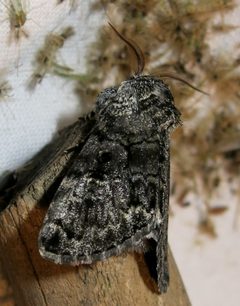
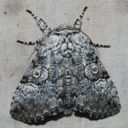
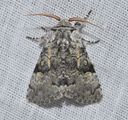
The combination of marbled gray-brown forewings with curved, smile-like markings distinguishes this from similar noctuids. The moderate size (38–48 mm wingspan) and pale hindwings separate it from larger or more vividly patterned relatives. Within the Charadra, C. deridens is the most widespread and commonly encountered species in North America.
Images
Appearance
have a wingspan of 38–48 mm. The forewings display marbled gray-brown patterning with irregular darker markings, creating a mottled, cryptic appearance. The "laugher" refers to the curved, smile-like markings on the forewings. Hindwings are typically paler, often pale gray or whitish with subtle venation visible.
Habitat
Deciduous and mixed forests, particularly areas with mature beech trees. Occupies woodland edges, forest interiors, and suburban parks with tree presence. Elevation range spans lowlands to moderate elevations in mountainous regions.
Distribution
Eastern Canada: Ontario, Quebec, New Brunswick, Nova Scotia, Prince Edward Island. Western Canada: British Columbia, Saskatchewan, Manitoba. United States: widespread through most regions except southwestern states (Arizona, New Mexico, southern California, and adjacent areas). Absence from the southwestern United States appears to reflect climatic or plant limitations.
Seasonality
active May to August in northern portions of range. Florida exhibit extended season beyond this window. Larval stage occurs during growing season, with timing dependent on local climate and plant .
Diet
Larvae feed on leaves of Fagus (beech). Additional recorded plants include Betula (birch), Ulmus (elm), Acer (maple), and Quercus (oak). feeding habits unknown.
Host Associations
- Fagus - primary larval leaves
- Betula - secondary larval leaves
- Ulmus - secondary larval leaves
- Acer - secondary larval leaves
- Quercus - secondary larval leaves
Life Cycle
Complete with , larva, pupa, and stages. Larvae are folivorous, feeding externally on leaves. stage not definitively established for all ; likely pupal in soil or leaf litter. Adults emerge in spring and summer.
Behavior
are and attracted to light. Larvae feed openly on leaf surfaces rather than mining or rolling leaves. No specialized defensive documented.
Ecological Role
Larval herbivore contributing to nutrient cycling in deciduous forest . Serves as prey for including birds, bats, and predatory arthropods. Not considered a significant pest despite polyphagy.
Human Relevance
Occasional minor defoliator in ornamental plantings of beech or oak, but rarely reaches damaging levels. Attracted to artificial light sources. Subject of citizen science documentation through platforms such as iNaturalist, with over 6,000 observations recorded.
Similar Taxa
- Charadra patafexOverlapping range in eastern North America; distinguished by differences in forewing pattern and markings
- Other Pantheinae generaSimilar size and habits; Charadra distinguished by specific forewing pattern elements including curved subterminal markings