
Hyppa
Duponchel, 1845
Species Guides
4- Hyppa brunneicrista
- Hyppa contrasta(Summer Hyppa Moth)
- Hyppa indistincta(indistinct hyppa moth)
- Hyppa xylinoides(Common Hyppa Moth)
Hyppa is a of noctuid distributed across the Holarctic region. The genus contains at least six described , including the widespread Hyppa xylinoides and the type species Hyppa rectilinea. Species within this genus are generally medium-sized moths with relatively nondescript forewing patterns. Larval stages are associated with herbaceous vegetation, though specific relationships remain incompletely documented for most species.
Pronunciation
How to pronounce Hyppa: /ˈhɪp.pa/
These audio files are automatically generated. While they are not always 100% accurate, they are a good starting point.
Identification
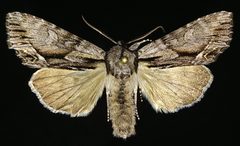
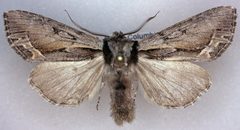
of Hyppa are distinguished from related noctuine primarily by genitalia , particularly the structure of the male clasping apparatus and female bursa copulatrix. Externally, they resemble other members of the Xylenini tribe, with forewings that are usually brownish or grayish with variable pattern elements including lines and spots. Hyppa xylinoides is recognizable by its relatively uniform gray-brown forewings with a distinct spot; Hyppa contrasta shows stronger contrast between dark basal and paler forewing areas. Accurate species identification generally requires dissection and examination of genitalic characters.
Images
Habitat
occur in a range of open and semi-open including meadows, forest edges, riparian corridors, and disturbed areas. Hyppa xylinoides shows particular association with moist grassy habitats and wetlands. Elevation range extends from lowlands to montane zones, with specific limits varying by species and region.
Distribution
Holarctic distribution, with records from northern Europe (Denmark, Norway, Sweden), North America (including Vermont and broader United States), and presumably intervening regions. Individual show varying ranges: Hyppa rectilinea is Palearctic, while Hyppa xylinoides and Hyppa contrasta occur in North America. The as a whole spans and temperate zones of both continents.
Seasonality
are active primarily during spring and early summer, with periods varying by and latitude. Hyppa xylinoides flies from April to June in most of its range, with possible partial second in southern areas. Hyppa contrasta has been documented flying in May and June.
Life Cycle
Complete with , larva, pupa, and stages. Larvae are ground-dwelling or low-feeding on herbaceous plants. occurs in soil or leaf litter. Specific details of voltinism and stage vary among and require further documentation.
Behavior
are and attracted to light. They have been observed visiting flowers for nectar. Larvae are presumed to be nocturnal feeders, though direct behavioral observations are limited in the literature.
Ecological Role
Larvae function as herbivores on low-growing plants. serve as when visiting flowers. The contributes to noctuid diversity in northern temperate and , supporting as prey for birds, bats, and insectivorous arthropods.
Human Relevance
No significant economic impact; not known as agricultural pests. are occasionally collected by enthusiasts and contribute to regional biodiversity records. The is of minor interest in ecological monitoring programs assessing moth composition.
Similar Taxa
- XylenaSimilar size, coloration, and wing pattern; distinguished by genitalia and often by more robust body and different season (autumn-winter for many Xylena versus spring for Hyppa)
- LithophaneOverlapping use and general appearance; Lithophane typically show more pronounced forewing markings and different genitalia structure
- EupitheciaSome smaller Hyppa may resemble Eupithecia in size, but Eupithecia (Geometridae) has different wing shape, resting posture, and lacks the noctuine wing venation
More Details
Taxonomic History
The was established by Duponchel in 1845 with Hyppa rectilinea as type . Hyppa ancocisconensis was synonymized with Hyppa xylinoides, reflecting historical confusion in species boundaries. The genus has remained relatively stable in its circumscription, though species-level required clarification through 20th century revisions.
Research Needs
Larval plant records are poorly documented for most . details, including precise voltinism and , require field study. The stages of several species remain undescribed.