
Homoglaea carbonaria
(Harvey, 1876)
cutworm moth, dart moth
Homoglaea carbonaria is a of or dart moth in the Noctuidae, first described by Harvey in 1876. It was originally placed in the Lithophane before being transferred to Homoglaea. The species is known from North America, with records from the Canadian provinces of Alberta, Manitoba, and Saskatchewan. As a member of the Noctuidae, it likely has a typical noctuid with larvae that are cutworms, though specific biological details remain poorly documented. The MONA or Hodges number for this species is 9883.
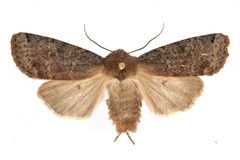
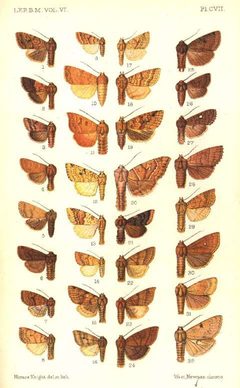
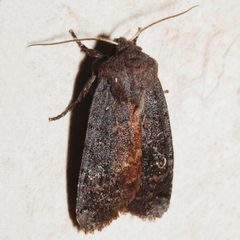
Pronunciation
How to pronounce Homoglaea carbonaria: /ˌhoʊmoʊˈɡliːə ˌkɑːrbəˈnɛəriə/
These audio files are automatically generated. While they are not always 100% accurate, they are a good starting point.
Images
Distribution
North America; recorded from Alberta, Manitoba, and Saskatchewan in Canada. The full extent of its range within North America is not well documented.
More Details
Taxonomic history
Originally described as Lithophane carbonaria by Harvey in 1876, this was later transferred to the Homoglaea. The basionym Lithophane carbonaria reflects this taxonomic history.
Catalogue reference
The is catalogued with MONA/Hodges number 9883 in the of North America database.