
Aseptis susquesa
Smith, 1908
Aseptis susquesa is a noctuid described by John Bernhardt Smith in 1908. It occurs in the southwestern United States and northwestern Mexico, inhabiting rocky desert and mountain-desert transition zones. fly in spring, and larvae feed on specific desert shrubs.
Pronunciation
How to pronounce Aseptis susquesa: /əˈsɛptɪs sʌsˈkwɛsə/
These audio files are automatically generated. While they are not always 100% accurate, they are a good starting point.
Identification
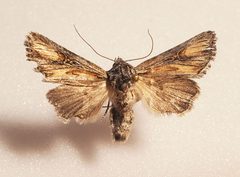
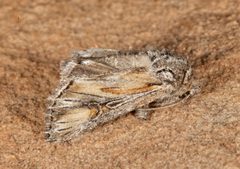
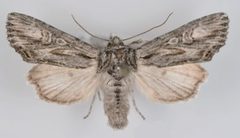
Distinguished by the combination of streaky gray-brown forewings with warm orange-tan to yellow-tan streaks in specific locations (postreniform patch, fold, claviform spot), obsolete transverse lines, and light whitish gray hindwings with dark . The thin tan line near the anal angle margin is a notable feature. Similar Aseptis may lack the distinct warm tan streaking pattern or have different hindwing coloration.
Images
Habitat
Rocky areas in the mountain-desert transition zone and high desert.
Distribution
Arizona, California, and Baja California (Mexico), at least as far south as Ensenada.
Seasonality
on wing from late March to early June.
Diet
Larvae feed on Artemisia californica and Ericameria laricifolia.
Host Associations
- Artemisia californica - larval food plant
- Ericameria laricifolia - larval food plant
Life Cycle
Larvae are dark green marked with white.
Ecological Role
Larval herbivore on desert shrubs; role in not documented.
Similar Taxa
- Other Aseptis speciesSimilar general and pattern elements, but A. susquesa is distinguished by its specific warm tan streaking pattern and geographic range.