
Aseptis ethnica
Smith, 1899
Aseptis ethnica is a noctuid described by John Bernhardt Smith in 1899. It occurs in western North America from Arizona and California north to western Oregon, and extends into Baja California Norte, Mexico. fly from early May through August. The is associated with open pine-oak forests and mountain chaparral, with larvae feeding on Arctostaphylos species.
Pronunciation
How to pronounce Aseptis ethnica: /əˈsɛptɪs ˈɛθnɪkə/
These audio files are automatically generated. While they are not always 100% accurate, they are a good starting point.
Identification
Distinguished from Aseptis fumeola by its less contrasting appearance, lack of contrasting black-outlined spots, absence of patchy dark shading, and lack of a reddish postreniform patch. Geographic variation in forewing coloration (grayish-tan in south, deeper brown in north) aids identification.
Images
Appearance
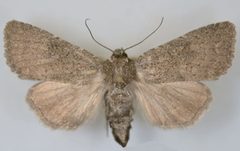
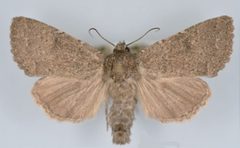
Wingspan 38–43.5 mm. Forewings vary geographically: in southern California, dull grayish-tan with a grainy texture; in central and northern California and Oregon, dull deeper brown, sometimes with reddish tones surrounding the dark-filled and spots. Overall less contrasting than related .
Habitat
Open pine and oak forest, mountain chaparral. In southern California, primarily above 1500 meters elevation; occurs at lower elevations farther north.
Distribution
North America: Arizona, California, western Oregon, USA; Baja California Norte, Mexico.
Seasonality
on wing from early May to August.
Diet
Larvae feed on Arctostaphylos .
Host Associations
- Arctostaphylos - larval plant
Similar Taxa
- Aseptis fumeolaAseptis ethnica is less contrasting overall, lacks black-outlined spots, lacks patchy dark shading, and lacks the reddish postreniform patch characteristic of A. fumeola.