
Agrochola
Hübner, 1821
Species Guides
3- Agrochola lota(Red-line Quaker)
- Agrochola pulchella(cutworm moth)
- Agrochola purpurea(Purple Sallow Moth)
Agrochola is a of in the Noctuidae, established by Jacob Hübner in 1821. are primarily autumn-flying (late August to November) with . The genus includes species of conservation concern; Agrochola litura has declined substantially in Britain (73% abundance decrease 1970–2016). Long-term monitoring data from Prague showed Agrochola lychnidis exhibited significant decrease over 29 years. Some authorities treat Sunira as a subgenus of Agrochola.
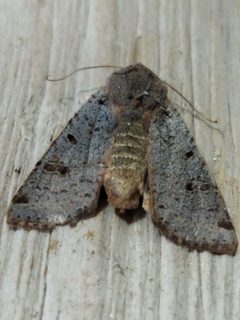
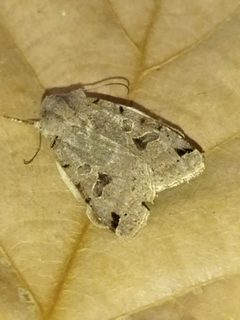
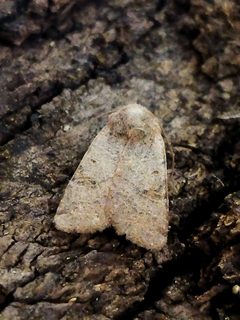
Pronunciation
How to pronounce Agrochola: /ˌæɡroʊˈkoʊlə/
These audio files are automatically generated. While they are not always 100% accurate, they are a good starting point.
Images
Habitat
Broad-leaved woodland and scrubland; hedgerows; parks; grasslands; heaths; fenland; gardens; parkland. Specific associations vary by .
Distribution
Europe from southern Scandinavia southwest to Pyrenees and northern Mediterranean edge; east through Turkey and Western Asia to Caspian Sea; Britain (including Scilly and Channel Islands); Asia Minor; Armenia. Records from North America (Vermont) require verification.
Seasonality
period: late August to early November. Peak activity in autumn. stage: .
Diet
Larvae: on herbaceous plants and grasses (A. litura); flower and developing seeds of deciduous trees including ash, poplar, sallow, and wych elm (A. circellaris). : feed on overripe blackberries and ivy blossom (A. litura).
Host Associations
- Salix - larval food plant (climbing )A. litura
- Crataegus - larval food plant (climbing )A. litura
- Quercus - larval food plant (climbing )A. litura
- Fraxinus (ash) - larval food plantA. circellaris
- Populus (poplar) - larval food plantA. circellaris
- Ulmus glabra (wych elm) - larval food plantA. circellaris
- Ulmus minor (field elm) - larval food plantA. circellaris
Life Cycle
Monovoltine. overwinter, hatching in spring. Larvae develop through spring and early summer; some climb trees to complete growth. Subterranean cocoon formed in early June with within six weeks. emerge late summer to autumn.
Behavior
, attracted to light. Larvae of some exhibit climbing onto trees to complete growth. Extended cocoon period (several weeks) observed before in A. circellaris.
Ecological Role
Seed and herbivore on deciduous trees; herbivore on herbaceous vegetation. trends have been used as indicators in long-term insect monitoring studies.
Human Relevance
Subject of long-term monitoring studies due to detectable abundance trends. Agrochola litura identified as of conservation concern with substantial documented decline. sequencing completed for A. litura and A. circellaris as part of Darwin Tree of Life project.
Similar Taxa
More Details
Genome Resources
Chromosomally complete assemblies available: A. litura (772.2 Mb, 32 chromosomal pseudomolecules including Z and W , 19,500 protein-coding genes); A. circellaris (572 Mb, 30 chromosomal pseudomolecules, 15.5 kb mitochondrial genome, 18,319 protein-coding genes).
Population Trends
A. litura: 73% abundance decline in Britain 1970–2016, 82% decline over 35 years. A. lychnidis: significant decrease detected in 29-year Prague light-trap study (1967–1995). These trends were not linked to diet, body size, abundance level, voltinism, or stage in multivariate analysis.
Fecundity
A. litura exhibits relatively low (201 from single studied female) and potential growth rate compared to some migrant noctuid .
Sources and further reading
- BugGuide
- Wikipedia
- GBIF taxonomy match
- iNaturalist taxon
- NCBI Taxonomy
- Catalogue of Life
- Agrochola lychnidis Archives - Entomology Today
- What Does It Take to Detect Long-Term Insect Abundance Trends?
- long-term trend examples - Entomology Today
- The genome sequence of the Brick, Agrochola circellaris (Hufnagel, 1766).
- The genome sequence of the Brown-spot Pinion, Agrochola litura (Linnaeus, 1761).