
Ufeus faunus
Strecker, 1898
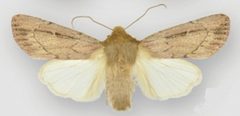
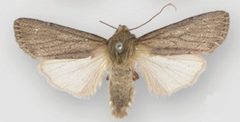
Ufeus faunus is a noctuid described by Strecker in 1898. It is restricted to the southwestern United States, with documented records from southwestern California to southern New Mexico. The species exhibits in forewing pattern and size, with females being slightly larger and possessing additional dark streaking. Larval development occurs under bark of riparian trees, with a producing in spring.
Pronunciation
How to pronounce Ufeus faunus: /ˈjuːfiəs ˈfɔːnəs/
These audio files are automatically generated. While they are not always 100% accurate, they are a good starting point.
Identification
Distinguished from similar Ufeus by combination of: southwestern U.S. distribution; pale buffy-brown forewings with specific black line pattern (zigzagged antemedial, toothed postmedial); translucent white hindwings with terminal buffy-brown shading; and female-specific dark streaking from spot. Forewing length range and in pattern provide additional diagnostic characters.
Images
Habitat
Associated with riparian corridors supporting cottonwood (Populus) and willow (Salix). Larvae occur under bark strips of these trees.
Distribution
Southwestern United States: southwestern California to southern New Mexico. Specific locality documented: Superior, Arizona.
Seasonality
Larvae present in late March. emerge in early May. Unlikely to be active in other seasons based on available records.
Diet
Larvae feed on cottonwood and willow. feeding habits unknown.
Host Associations
- Populus - larval cottonwood
- Salix - larval willow
Life Cycle
with single per year. Larval stage occurs in late winter to early spring. presumably occurs in bark or soil, with in early May.
Behavior
Larvae inhabit spaces under loose bark strips on trees. are presumably based on characteristics, though direct observations are not documented.
Ecological Role
Larval herbivore on riparian trees. Specific ecological functions otherwise unknown.
Human Relevance
No documented economic or cultural significance. Rarely encountered due to restricted range and specialized .
Similar Taxa
- Ufeus plicatusOverlaps in range; distinguished by forewing pattern details and male genitalia structure
- Ufeus satyricusEastern North American ; distribution separates it from U. faunus