Cosmia calami
Harvey, 1876
American Dun-bar Moth
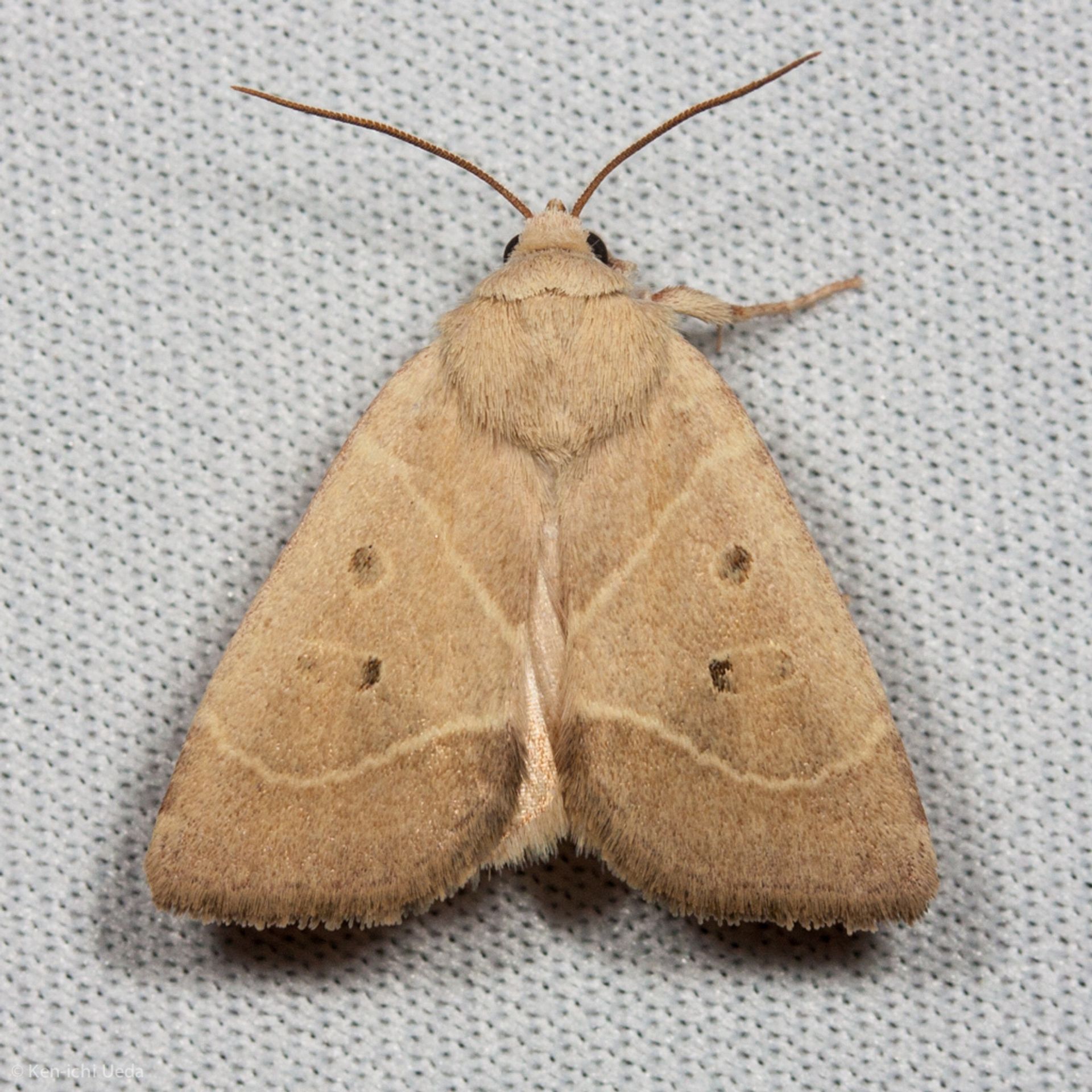
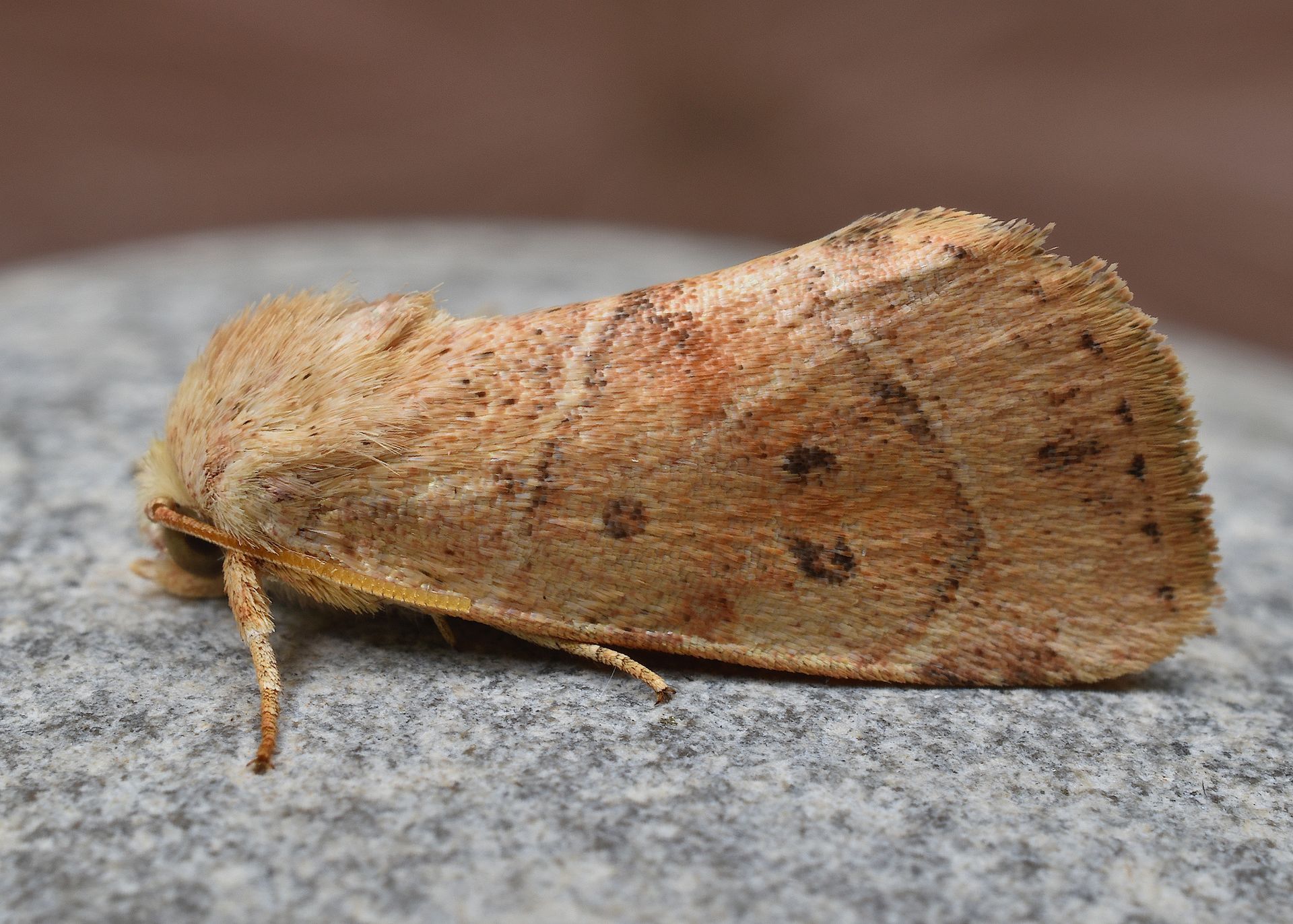
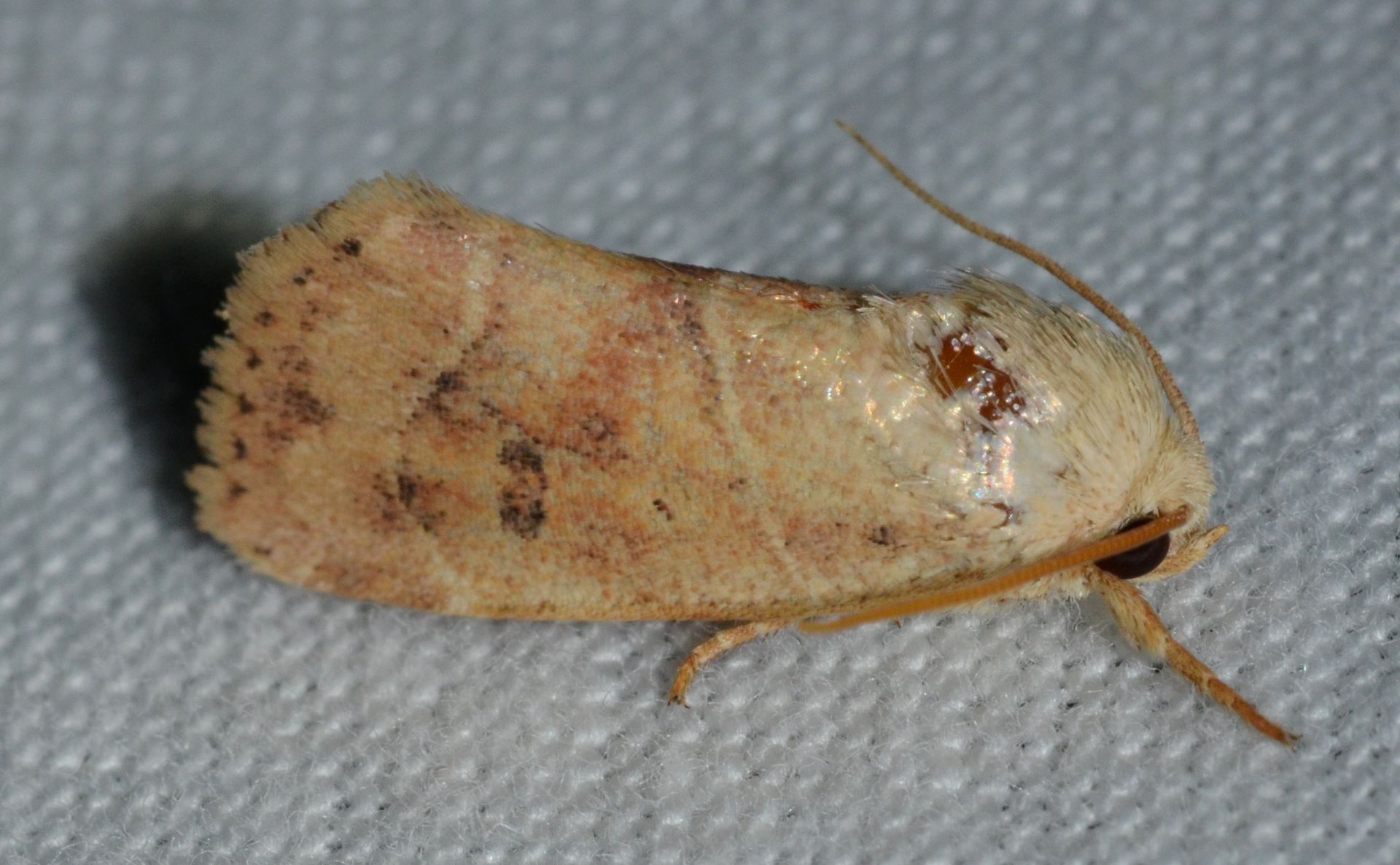
Cosmia calami, commonly known as the American Dun-bar , is a noctuid moth native to North America. The species is notable for its larval stage, which preys on geometrid caterpillars rather than consuming plant material. have a wingspan of approximately 32 mm. The species has been documented across a broad geographic range spanning from the Pacific Northwest to the eastern United States.
Pronunciation
How to pronounce Cosmia calami: //ˈkɒs.mi.ə kəˈlɑː.mi//
These audio files are automatically generated. While they are not always 100% accurate, they are a good starting point.
Identification
The can be distinguished from similar Cosmia species by its North American distribution and association with oak-feeding geometrid prey. Accurate identification likely requires examination of genitalia or molecular analysis, as external appears similar to related noctuids.
Images
Appearance
have a wingspan of approximately 32 mm. Specific details of wing patterning, coloration, and body are not documented in available sources.
Habitat
Associated with oak (Quercus) woodlands and forests, given larval dependence on geometrid caterpillars that feed on Quercus . Specific microhabitat preferences for are not documented.
Distribution
Documented in North America from California, Oregon, and Washington in the west to Georgia, Massachusetts, New Hampshire, New Jersey, Pennsylvania, Tennessee, and Wisconsin in the east. Additional records from Minnesota, Manitoba, and Saskatchewan.
Diet
Larvae are and feed on geometrid caterpillars that feed on Quercus . diet is not documented.
Host Associations
- Quercus - indirectLarvae prey on geometrid caterpillars that feed on oak
Ecological Role
Functions as a in oak woodland , potentially regulating of geometrid defoliators.
Similar Taxa
- Cosmia confinisSimilar size and distribution; may overlap in range and require genital dissection for separation
- Other Cosmia species-level morphological similarities necessitate careful examination for accurate determination
More Details
Sources and further reading
- BugGuide
- Wikipedia
- GBIF taxonomy match
- iNaturalist taxon
- NCBI Taxonomy
- Catalogue of Life
- Norm Gary: Jazz Is Music to His Ears--But So Are the Bees | Bug Squad
- Learning How Efficiently Spiders Capture Their Prey | Bug Squad
- Bug Eric: Spider Sunday: Featherlegged Orb-weavers
- Parsley poacher: Black swallowtail caterpillar, Papilio polyxenes — Bug of the Week
- Expert system method for Navarre grasslands classification
- Bug Eric: Spider Sunday: Triangle Spiders