
Orthosia pacifica
(Harvey, 1874)
Pacific Quaker
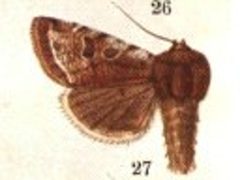
Orthosia pacifica, commonly known as the Pacific Quaker, is a of or dart moth in the Noctuidae. It is found in western North America. The species was first described by Harvey in 1874 under the basionym Taeniocampa pacifica. exhibit characteristic gray-brown coloration with patterned forewings and whitish hindwings. The species is assigned MONA/Hodges number 10494.
Pronunciation
How to pronounce Orthosia pacifica: /ɔrˈθoʊ.si.ə pəˈsɪ.fɪ.kə/
These audio files are automatically generated. While they are not always 100% accurate, they are a good starting point.
Identification
can be recognized by the combination of light brown forewings with darker brown and black markings contrasted against whitish hindwings with darker markings. The overall gray-brown body coloration distinguishes it from more vividly colored noctuid . The MONA/Hodges number 10494 provides a standardized reference for identification in North American surveys.
Images
Distribution
Western North America. Distribution records indicate presence across North America, with the specifically documented in western regions.
More Details
Taxonomic History
Originally described as Taeniocampa pacifica by Harvey in 1874, later transferred to Orthosia.
Standardized Reference
Assigned MONA ( of North America) or Hodges number 10494 for identification and cataloging purposes.