
Orthosia alurina
(Smith, 1902)
Gray Quaker
Orthosia alurina, commonly known as the gray Quaker, is a of owlet moth in the Noctuidae. It occurs in North America, where are active in early spring. The species was originally described as Taeniocampa alurina by Smith in 1902. Like other members of the Orthosia, it is part of the early spring fauna that emerges before most deciduous trees leaf out.
Pronunciation
How to pronounce Orthosia alurina: /ɔɹˈθoʊziə əˈlʊɹɪnə/
These audio files are automatically generated. While they are not always 100% accurate, they are a good starting point.
Identification
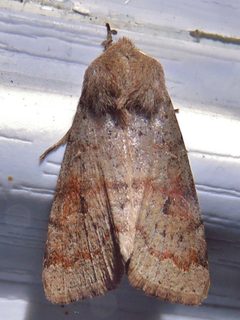
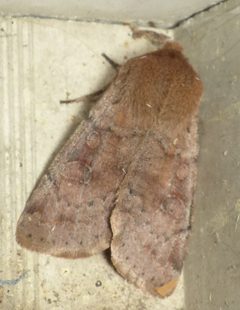
The gray Quaker can be distinguished from other Orthosia by its grayish coloration. It is most similar to the Common Quaker (Orthosia cerasi) and Hebrew Character (Orthosia gothica), but specific distinguishing features require examination of wing pattern details and genitalia. are medium-sized noctuid with relatively broad, rounded forewings typical of the .
Images
Distribution
North America. Records include the United States, with specific documentation from Vermont.
Seasonality
fly in early spring, with activity beginning in March. This follows the pattern of other Orthosia , which are among the first noctuid to emerge each year.
Life Cycle
emerge from pupae in early spring. This pattern is consistent with other Orthosia , though specific details for O. alurina are not documented.
Behavior
are and attracted to artificial light sources. They have been documented at blacklight setups in residential settings.
Human Relevance
The is of interest to enthusiasts and contributes to early spring biodiversity records. It is not known to be an agricultural pest.
Similar Taxa
- Orthosia cerasiCommon Quaker; similar grayish appearance and early spring period, but differs in wing pattern details
- Orthosia gothicaHebrew Character; another early spring Orthosia with overlapping range and season, distinguished by characteristic dark marking on forewing
More Details
Taxonomic history
Originally described by Smith in 1902 as Taeniocampa alurina, later transferred to Orthosia. The basionym Taeniocampa alurina is cited in NCBI .
Cataloging
The is assigned MONA ( of North America) or Hodges number 10491, used for standardized reference in North American lepidopteran databases.