
Morrisonia mucens
(Hübner, [1831])
Gray Woodgrain Moth, gray woodgrain
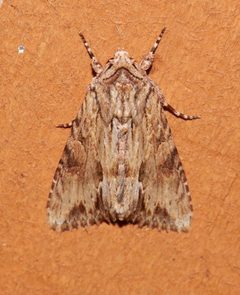
Morrisonia mucens, commonly known as the gray woodgrain , is a small noctuid moth with a wingspan of approximately 29 mm. It occurs across the southeastern and eastern United States, from coastal Massachusetts south to Florida and west to Texas. The has one per year.
Pronunciation
How to pronounce Morrisonia mucens: //mɔːˈrɪʃiːə mjuːˈsɛnz//
These audio files are automatically generated. While they are not always 100% accurate, they are a good starting point.
Identification
Best distinguished from similar noctuid by its small size (29 mm wingspan), gray woodgrain-patterned wings, and geographic occurrence in the eastern and southeastern United States. Specific diagnostic characters distinguishing it from are not documented in available sources.
Images
Appearance
Small with wingspan approximately 29 mm. The 'gray woodgrain' suggests grayish coloration with wood-grain-like patterning on the wings, though specific markings are not detailed in available sources.
Habitat
Associated with oak-dominated ; larvae have been reared on Quercus nigra (water oak), indicating occurrence in areas supporting this oak .
Distribution
United States: coastal Massachusetts south to Florida and west to Texas.
Seasonality
One per year; specific period not documented in available sources.
Diet
Larvae have been reared on Quercus nigra (water oak). feeding habits unknown.
Host Associations
- Quercus nigra - larval Larvae have been successfully reared on this in captivity.
Life Cycle
One per year (). Specific details of , larval, pupal, and stages not documented in available sources.
Ecological Role
Larval herbivore on oak foliage; specific ecological impacts not documented.
Human Relevance
No significant documented interactions with humans; of interest to lepidopterists and naturalists.
Similar Taxa
- Other Morrisonia species share similar size range and noctuid ; precise identification requires examination of genitalia or other subtle characters not described in general sources.
- Other small gray noctuid mothsNumerous noctuid exhibit gray coloration and similar size; woodgrain patterning may aid field identification but confirmation likely requires examination.
More Details
Nomenclature
Listed as a synonym under Achatia mucens in some taxonomic databases (GBIF), though Morrisonia mucens remains the accepted name in major North American lepidopteran resources including the North American Photographers Group and BugGuide.
Observation frequency
Well-documented with over 1,500 observations on iNaturalist, indicating it is relatively commonly encountered within its range.